
The Tagimoucia Flower
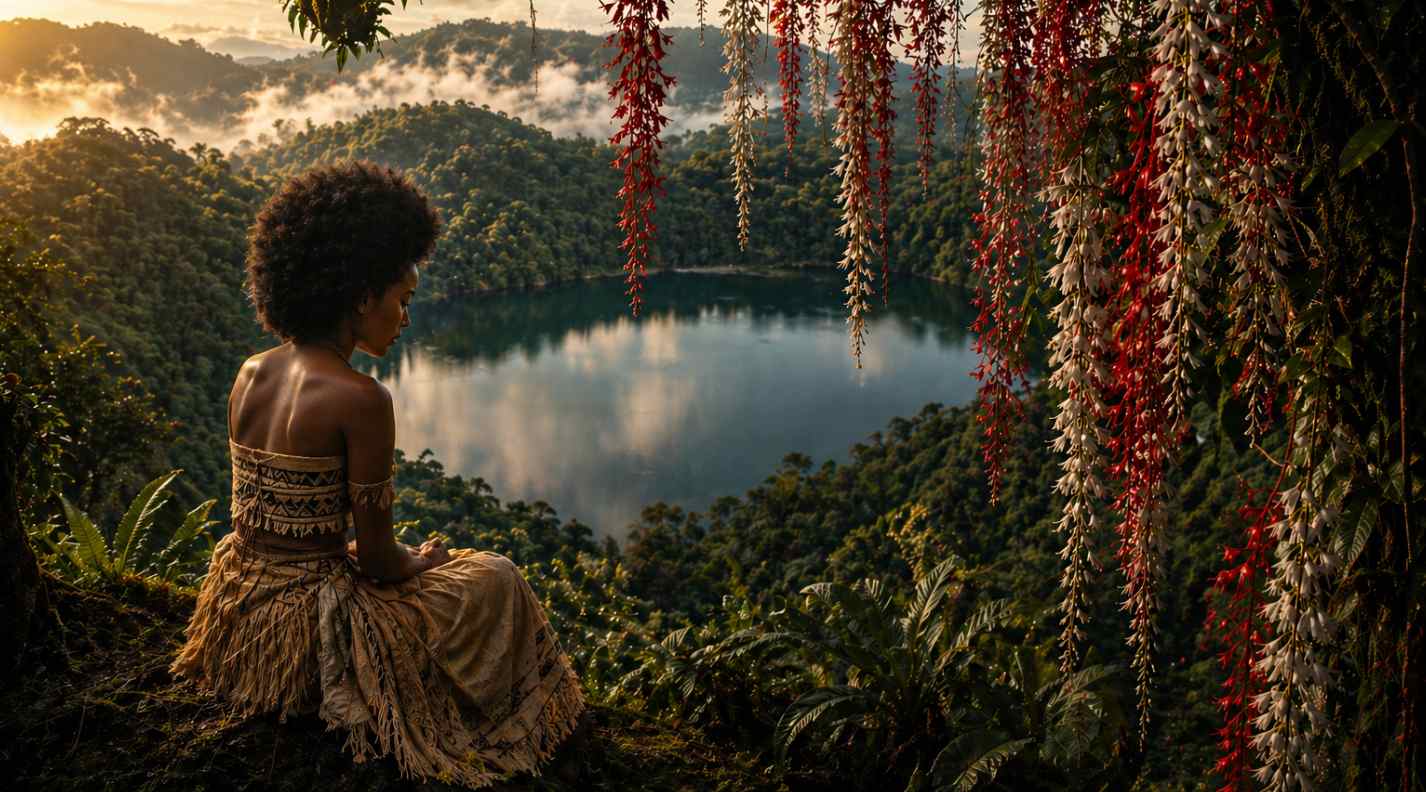
On the high slopes of Taveuni, above the cloud line where the air smells of rain and the tree ferns grow taller than houses, there is a lake that most visitors never reach. Lake Tagimoucia sits inside the crater of an ancient volcano near the island's summit. It is completely still on calm mornings.
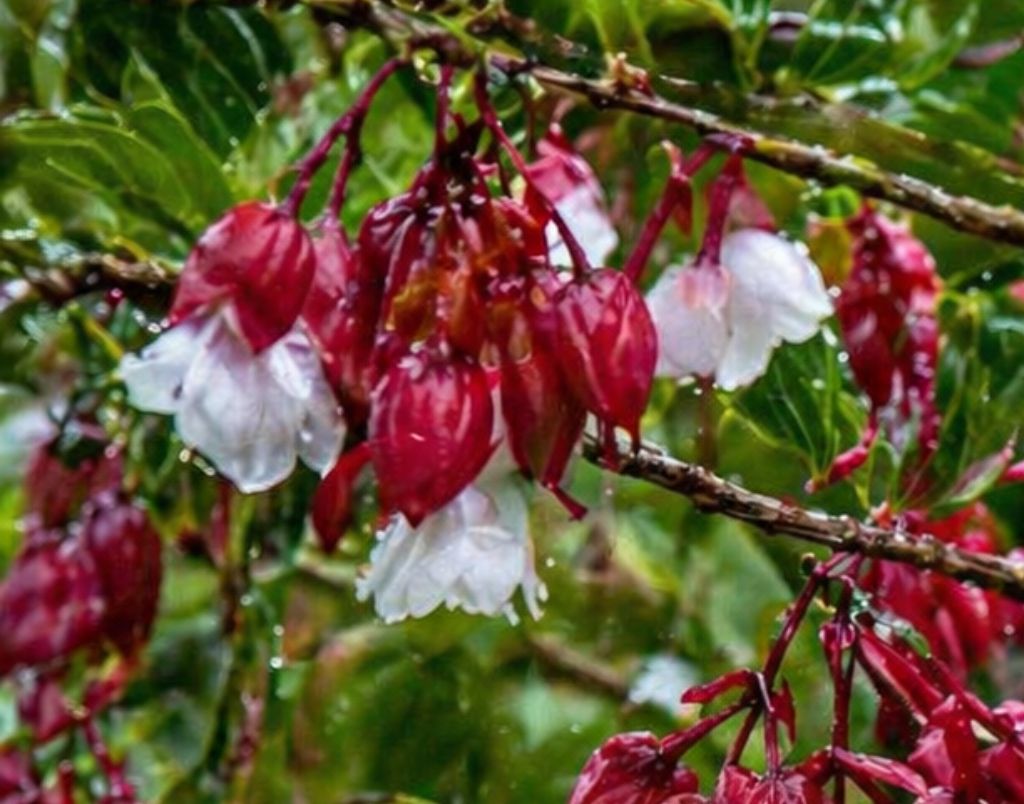
The jungle around it is dense and old, the kind of old that makes sound behave differently — softer, more careful. And growing at the water's edge, climbing through the branches and cascading down toward the lake's surface in long curtains of red and white, is a flower that exists nowhere else on Earth. The Fijians of Taveuni call it tagimoucia.
The name comes from two words: tagi, which means to weep, and moucia, which means in the upper regions — in the heights. The flower of weeping in the high places. And the people of this island have always known why it grows there, because they have always told the story of how it came to be. A young woman — the daughter of a chief — fell completely in love. The man she loved was real: present in the village, known to her family, someone she had grown up beside. But her father refused the match. His reasons were the reasons fathers give when they mean to be final: rank, clan, the obligations of a chiefly family to marry where alliances are made rather than where hearts lead.
She accepted this the way a person accepts something unacceptable — outwardly, and not at all inwardly.
One morning before the village woke, she left. She climbed the mountain behind the settlement, past the gardens and the paths used by fishermen, up through the forest where the ground became soft and the mist moved between the trees.
She kept climbing until the village was gone below her and the sky was gone above her and there was nothing around her but the forest and the sound of water running somewhere close.
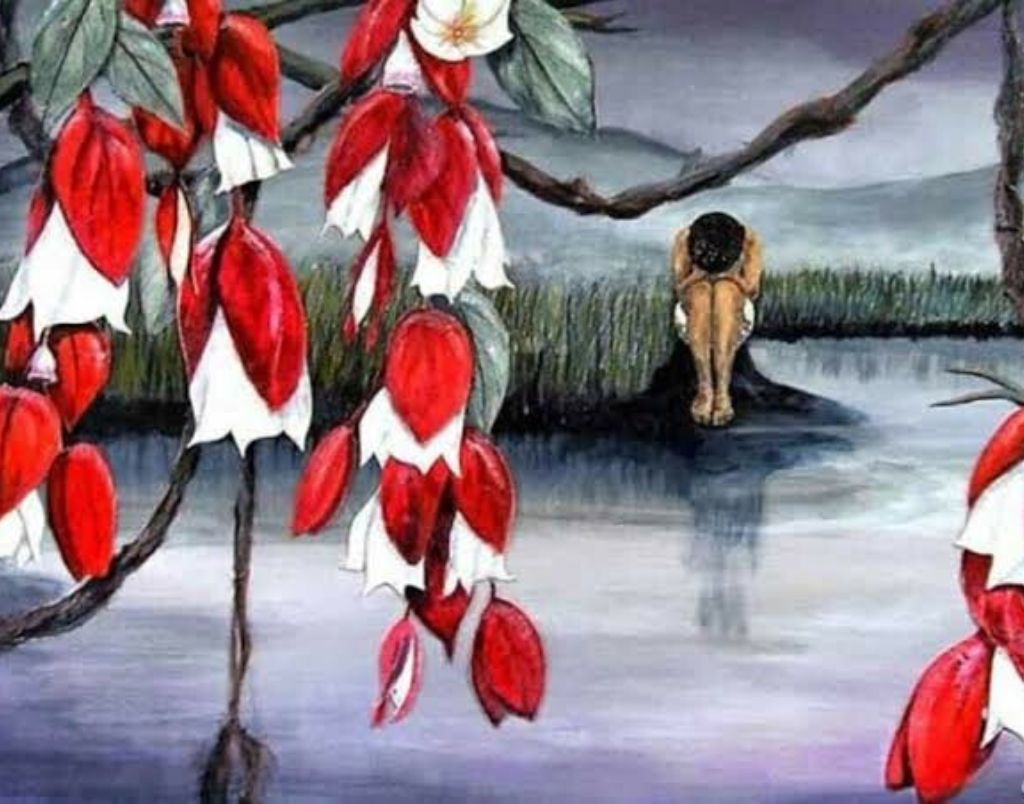
She found the lake. She sat down at the edge of it. And she wept.
The people of Taveuni do not make this part of the story brief. She wept for a long time — long enough for the forest to settle around her grief, long enough for the water of the lake to reflect nothing but her face and the sky, long enough that something began to happen at the place where her tears fell into the soil at the water's edge.
When she finally left — or when the mountain finally took her in, which some versions of the story hold — the vine was already beginning. It grew from the exact place she had sat. It climbed the nearest tree and spread along the branches and over the water, and when it flowered, the blooms were the deep red of something that costs everything and the white of the relief that comes when you have finally, completely let go.
The Fiji Museum holds botanical specimens and records the legend as part of Taveinu's living cultural heritage. The iTaukei Institute of Language and Culture recognises it as an oral tradition of the Taveinu people — not a story from one source or one time, but a story that has been told continuously by the communities of this island for as long as the flower has been blooming.
From a Tour Guide's Perspective
By: Kaminieli Tuiwasa
“The tagimoucia blooms once a year, between November and January, when the rains are heaviest and the lake is fullest. It has been cultivated in botanical gardens in several countries. Every attempt has failed. It requires the specific altitude, the specific volcanic soil, the specific rainfall of that single lake on that single island. It will not grow anywhere that is not the place where it first grew.”