
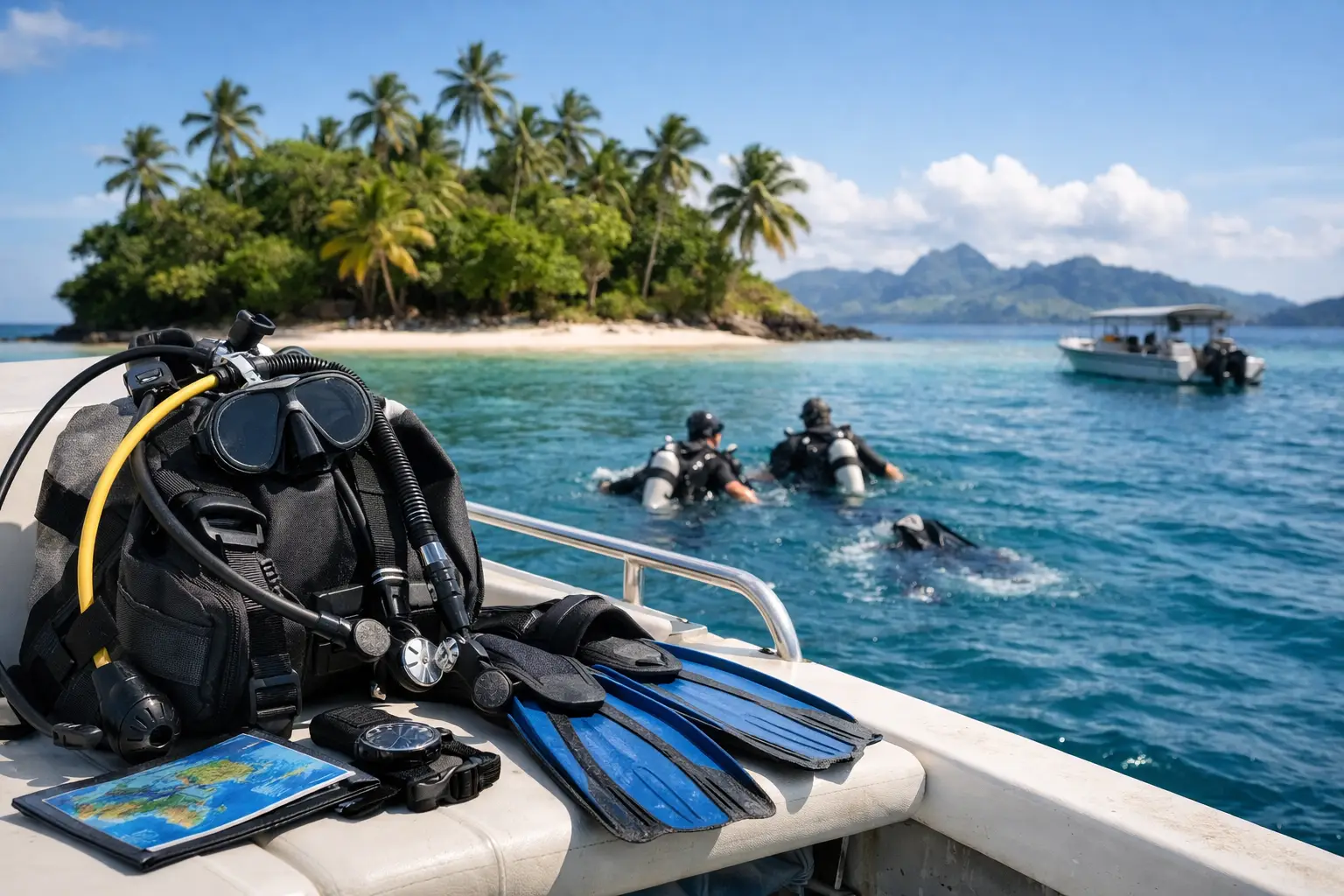
A Fiji scuba diving day trip can turn a few hours ashore into a close look at one of the South Pacific’s great underwater environments. Soft corals, clear blue water, reef fish, and dramatic coral structures are often within reach of the main visitor gateways, but the best day is not simply about choosing a beautiful reef. For cruise guests especially, it depends on port timing, transfer distances, weather, certification status, and a well-managed return plan.
Fiji is known internationally as the Soft Coral Capital of the World, yet its diving is varied rather than uniform. Some sites are calm and colorful, ideal for a relaxed first experience after time at sea. Others are exposed to currents and better suited to divers who are comfortable with drift conditions and changing water movement. Planning with local knowledge helps match the day to the diver, not just the photograph.
Choose the Right Fiji Scuba Diving Day Trip for Your Port
Your ship’s port of call shapes almost every part of the experience. A day in Lautoka may offer access to the waters around the Mamanuca and Yasawa island regions, while a call at Suva places visitors closer to different reef systems on Viti Levu’s southeast coast. Tender operations, ship clearance, local traffic, marina departure times, and the distance from port to boat all need to be considered before promising a particular dive location.
For travelers on a cruise itinerary, the priority is not always the furthest offshore site. A closer, well-chosen reef can provide an outstanding dive while allowing comfortable margins for transfers, check-in, equipment fitting, and return to the vessel. The strongest shore programs are built around the ship’s actual time in port, with contingency planning for weather and operational changes.
Independent guests staying on Viti Levu have more flexibility. They may be able to select a full-day boat program with two dives, extend their stay near a dedicated dive area, or arrange private transport to meet a marina departure. Families and multigenerational groups can also combine diving with a separate island, beach, or snorkeling experience so each traveler has a day that suits their confidence and interests.
Certification, Experience, and Comfort in the Water
Certified divers should bring proof of certification and be ready to share details about their recent diving experience. A logbook, whether digital or physical, can be helpful when an operator is assessing appropriate sites and group placement. If it has been some time since your last dive, a refresher or a conservative, guided profile may be the wiser choice.
Open-water certification is suitable for many Fiji reef dives, but conditions matter. Current, depth, surface chop, and boat-entry style can affect whether a particular site is appropriate on the day. More advanced divers may seek deeper reef walls, pinnacles, or drift dives, while newer divers often enjoy protected coral gardens where there is more time to settle in and observe the reef.
Non-certified guests should not assume every “scuba day trip” is open to beginners. Some operators offer introductory supervised experiences, subject to medical screening, weather, and local operating requirements. Others focus solely on certified diving. If a member of your party wants to try scuba for the first time, confirm this well before arriving in port rather than treating it as a last-minute add-on.
Medical readiness deserves the same attention as certification. Certain health conditions, recent surgery, respiratory concerns, or medications may require professional medical advice before diving. Guests should also allow an appropriate interval between their final dive and flying. This is particularly relevant for visitors continuing from Fiji by air after a short stay.
What a Well-Organized Day Looks Like
A quality day begins before the boat leaves the dock. Guests should receive clear joining instructions, including meeting location, transfer timing, what identification or documents to carry, and whether meals, refreshments, equipment, and marine park or landing fees are included. For cruise passengers, the transfer plan should account for the walk from the pier, security procedures, and the time needed to rejoin the ship.
At the marina, experienced crew will normally confirm certifications, ask about recent dives and health declarations, explain equipment, and provide a site briefing. The briefing should cover the planned route, maximum depth, expected visibility and current, hand signals, buddy procedures, and what to do if conditions change. These details are not formalities. They are what make a day offshore feel relaxed rather than rushed.
Many full-day programs include two dives with a surface interval between them. The interval is a good time to hydrate, have a light meal, compare notes with your guide, and enjoy Fiji’s island scenery from the water. Actual timing varies with location, sea conditions, and the needs of the group. A responsible operator will adjust the plan if the wind rises, visibility changes, or a site is not performing as expected.
For larger cruise groups, coordination becomes even more important. Transport capacity, vessel manifests, guide ratios, equipment sizing, and scheduled departures all need to work together. Rosie Fiji Cruises can coordinate shore-side logistics alongside curated marine experiences, helping visitors and cruise partners keep the day focused on the reef rather than the movement between port, road, marina, and vessel.
Fiji’s Reefs Reward a Slower Look
The appeal of diving in Fiji is often found in the details. Look beyond the first bright schools of fish and you may notice anemones moving in the current, small reef creatures tucked into coral branches, blue starfish on the sand, and soft corals opening across a reef face. A good guide knows when to point something out and when to let guests quietly take in the scene.
Water conditions can change by season and location. Fiji’s tropical climate means warm water year-round, although exposure to wind, rain, and swell varies across the islands and between coastlines. Visibility is never guaranteed, and the most colorful soft corals can be especially impressive when there is enough current to bring them life. That creates a real trade-off: calm water may feel easier for newer divers, while moderate current can make an experienced diver’s reef encounter more dynamic.
Marine life sightings are also never promises. Turtles, reef sharks, rays, and larger pelagic visitors may appear, but the strongest reason to dive Fiji is the health and texture of its reef habitat, not a checklist of guaranteed animals. Travelers who arrive ready to observe rather than chase a single sighting usually have the most rewarding day.
Pack for the Boat, Not Just the Beach
A swimsuit, reef-safe sun protection, towel, sunglasses, and a dry change of clothes are sensible essentials. Bring a reusable water bottle if permitted, and secure any medication you may need in a dry bag. If you use prescription lenses, ask in advance about mask options rather than relying on contact lenses in salt water.
Divers with their own masks, computers, cameras, or exposure protection should confirm what can be accommodated and how equipment will be stored on board. Renting full equipment is convenient for most cruise visitors, but personal gear can improve comfort when it is familiar and properly serviced. Underwater camera users should remember that a first dive at a new site is often better spent getting oriented than trying to capture every moment.
Avoid alcohol before diving, stay hydrated after time in the sun, and be honest with the crew if you feel unwell or anxious. Sitting out a dive is disappointing, but it is always preferable to forcing a day that does not feel right.
Make the Most of Limited Time Ashore
The best Fiji scuba diving day trip is one that respects both the ocean and the clock. When choosing an experience, ask how long the road and boat transfers take, how many dives are realistically planned, what happens if weather alters the route, and what return margin is built in for cruise guests. Clear answers are a sign that the operator understands the realities of port calls, not just the appeal of a reef.
A well-planned day leaves room for Fiji’s warmth above the water too: a welcoming crew, island views on the crossing, and the satisfaction of returning to port with salt in your hair and a reef still fresh in your mind. Choose an experience that fits your available time and diving comfort, then let Fiji’s underwater world do what it does best - reward your attention.