
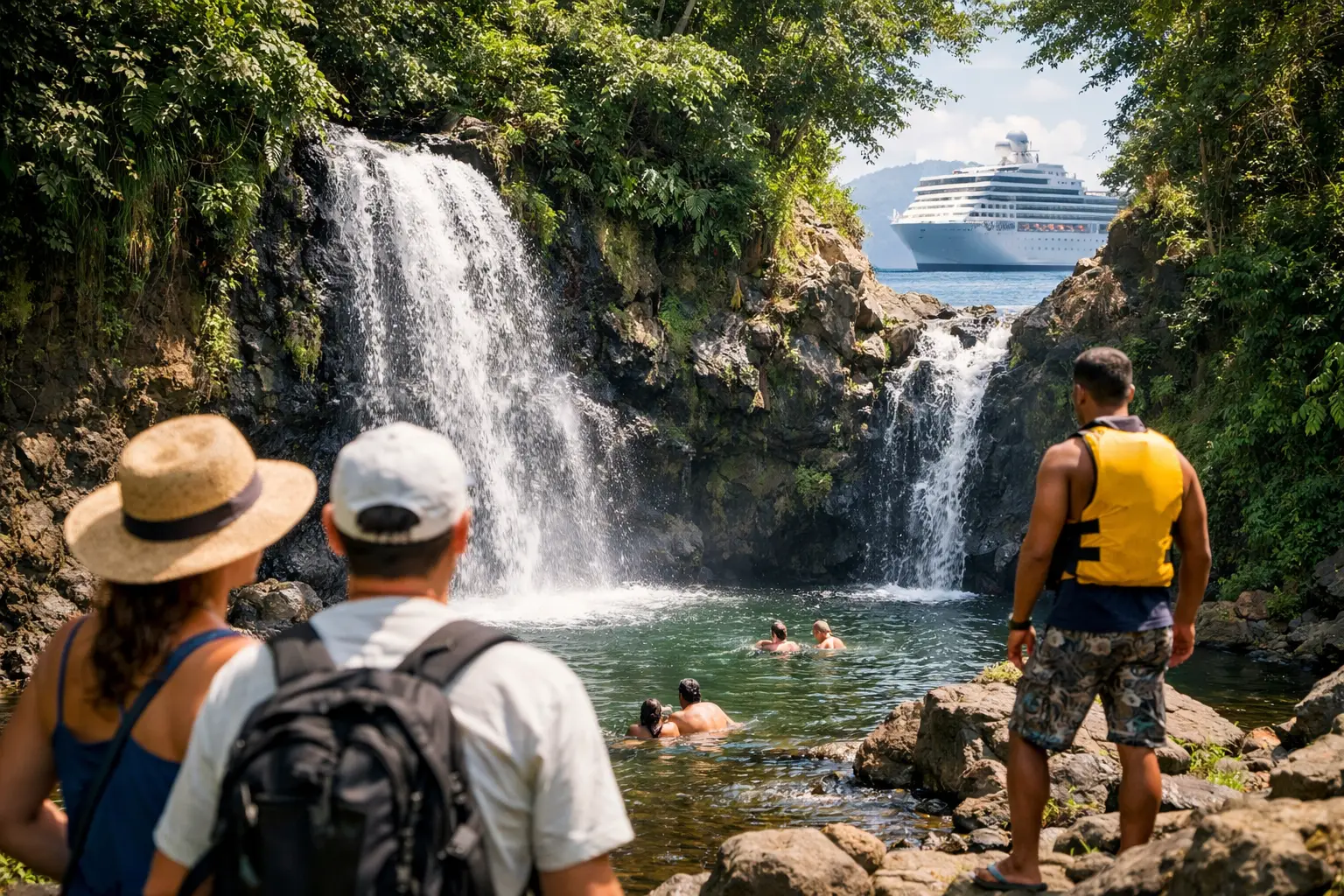
A Lautoka waterfall tour is not about rushing from a ship to a photo stop. It is a chance to leave the busy waterfront behind, travel into Fiji’s green interior, and experience the landscapes and village traditions that shape life beyond the coast. For cruise guests with one day ashore, the difference is in the planning: reliable transport, an experienced local guide, a realistic walking pace, and enough time to return to port comfortably.
The Lautoka area is a natural gateway to the highlands of western Viti Levu. Sugarcane country gives way to forested roads, cooler elevations, streams, and village communities where guests can gain a more personal sense of Fiji. Waterfall outings may vary according to seasonal conditions, access arrangements, and the time available in port, but the best ones combine the journey inland with respectful cultural connection rather than treating the waterfall as an isolated attraction.
What to Expect on a Lautoka Waterfall Tour
A well-managed day generally begins with a coordinated port pickup and a short orientation from your guide. As the drive moves away from Lautoka, the scenery changes quickly. Open farmland, mountain ridges, and tropical vegetation create a striking contrast with the harbor and the Coral Coast-style beach images many visitors expect from Fiji.
The waterfall portion of the experience usually involves a nature walk rather than a curbside arrival. Paths can be uneven, muddy after rain, and occasionally steep. That is part of the appeal for travelers who want to see a wilder side of the island, but it also means the excursion should be selected honestly according to your mobility, footwear, and comfort in warm, humid conditions.
Depending on the route, a tour may also include a village visit or traditional welcome. These moments should be guided with care. Villages are living communities, not performance sets, and local protocols matter. A knowledgeable guide helps guests understand when to remove hats, where photography is appropriate, how to dress respectfully, and why a customary welcome carries meaning.
For many cruise visitors, this combination is the real value of an inland excursion: rainforest scenery, a refreshing natural setting, and conversation that offers context for the places passing outside the vehicle window.
Choosing the Right Waterfall Experience
Not every Lautoka waterfall tour is right for every passenger. Cruise schedules, weather, group makeup, and the specific waterfall route all affect what is practical. A family with young children may prefer a gentler walk and more time for cultural activities, while active travelers may welcome a longer trail and time for a swim where conditions permit.
Before confirming an excursion, ask about the expected total duration from ship to ship, the length and surface of the walk, restroom availability, swimming opportunities, and what happens if heavy rain affects access. Fiji’s wet conditions are part of what keep the countryside so lush, but they can change trail conditions quickly. A responsible operator will adapt the day when needed rather than press ahead with an unsuitable route.
Guests with limited mobility should not assume that every scenic inland experience requires a demanding hike. It is often possible to arrange a countryside and cultural itinerary with panoramic stops, village interaction, and accessible nature settings. The right experience is the one that lets everyone enjoy the day with confidence, not the one that looks most ambitious on paper.
Why cruise-day timing matters
An independent outing can sound appealing until transfer times, road conditions, and ship departure deadlines enter the picture. Lautoka is a working port, and cruise operations run to a precise schedule. A waterfall experience needs to allow for the drive inland and back, a sensible buffer before all-aboard time, and communication between the ground team and the ship’s program.
This is particularly important when weather shifts or road conditions slow the day. A locally based cruise-services team can monitor the itinerary, adjust pacing, and ensure that the guest experience remains enjoyable without putting return-to-ship timing under pressure. For travel advisors and shore-excursion planners, that operational discipline is as important as the landscape itself.
What to Wear and Bring
Comfortable closed-toe walking shoes with grip are the most useful item for a waterfall day. Sandals may be suitable around the resort, but they are rarely ideal on wet roots, stones, or uneven tracks. Lightweight clothing, a hat, insect repellent, sunscreen, and a refillable water bottle are also sensible choices.
Bring swimwear only if the confirmed itinerary includes swimming and your guide confirms conditions are suitable on the day. A small towel and a dry change of clothes can make the return journey more comfortable. Keep valuables to a minimum, and protect phones and cameras in a waterproof pouch or small dry bag.
Dress modestly if a village visit is part of your program. Shoulders and knees are best covered, particularly when entering a community setting. Your guide will provide route-specific advice, including whether a sulu, the traditional Fijian wrap, is recommended for the visit.
The Cultural Side of the Journey
Waterfalls may draw the first interest, but the drive through western Viti Levu often becomes the part guests remember most. Fiji’s inland communities have strong ties to the land, with traditions of farming, family, ceremony, and hospitality that cannot be understood from a beach alone.
A respectful village visit may include a welcome, a chance to meet local hosts, or time to learn about everyday life in the highlands. The format depends on the community and the agreed program. It should never be rushed or intrusive. Guests who listen, ask thoughtful questions, and follow local guidance often come away with a much richer understanding of Fiji than a scenic stop could provide on its own.
This is also where a trained local guide adds real value. They can interpret what guests see, from crops and plants along the road to the significance of customary protocols. They help bridge the gap between a brief shore visit and a meaningful connection to place.
Planning for Families, Groups, and Private Guests
For multigenerational families, the best waterfall itinerary often balances activity with downtime. A shorter walk, shaded breaks, and a relaxed lunch or village component can be more enjoyable than trying to fit too much into one port call. Parents should consider whether children are confident walkers and comfortable around slippery natural surfaces.
Private groups have greater flexibility to shape the pace. Couples may prefer a more scenic, intimate day, while incentive groups can combine inland sightseeing with cultural entertainment or a hosted meal. Larger cruise groups require a different level of coordination, including coach logistics, guide allocation, meeting points, timed departures, and clear passenger communication.
Rosie Fiji Cruises brings these pieces together through local transport, trained guides, port coordination, and destination knowledge developed over decades in Fiji. That capability matters whether the requirement is a small private outing or a shore program for a full vessel of guests.
A Few Practical Questions to Ask
The strongest tour planning starts with clear information. Confirm whether the itinerary is suitable for your fitness level, whether lunch and refreshments are included, and whether there is time to purchase local crafts or support community vendors. If food is part of the day, share dietary needs in advance, especially for vegetarian, vegan, gluten-free, or allergy-sensitive travelers.
It is also worth asking how the experience changes in wet weather. A good answer is not simply that the tour runs rain or shine. It should explain the alternative plan, the safety thresholds for walking or swimming, and how the operator will communicate any change. In tropical Fiji, flexibility is a mark of good service.
For guests traveling from the United States or other long-haul markets, jet lag can influence the day more than expected. An early shore call followed by a warm inland drive can feel demanding after several travel days. Choose an itinerary that leaves room to enjoy the setting rather than one that turns a special Fiji experience into a race against the clock.
A waterfall day from Lautoka is at its best when it feels unhurried, well cared for, and connected to the people who call this part of Fiji home. Bring good shoes, an open mind, and a little curiosity - the road beyond the port has stories worth making time for.