
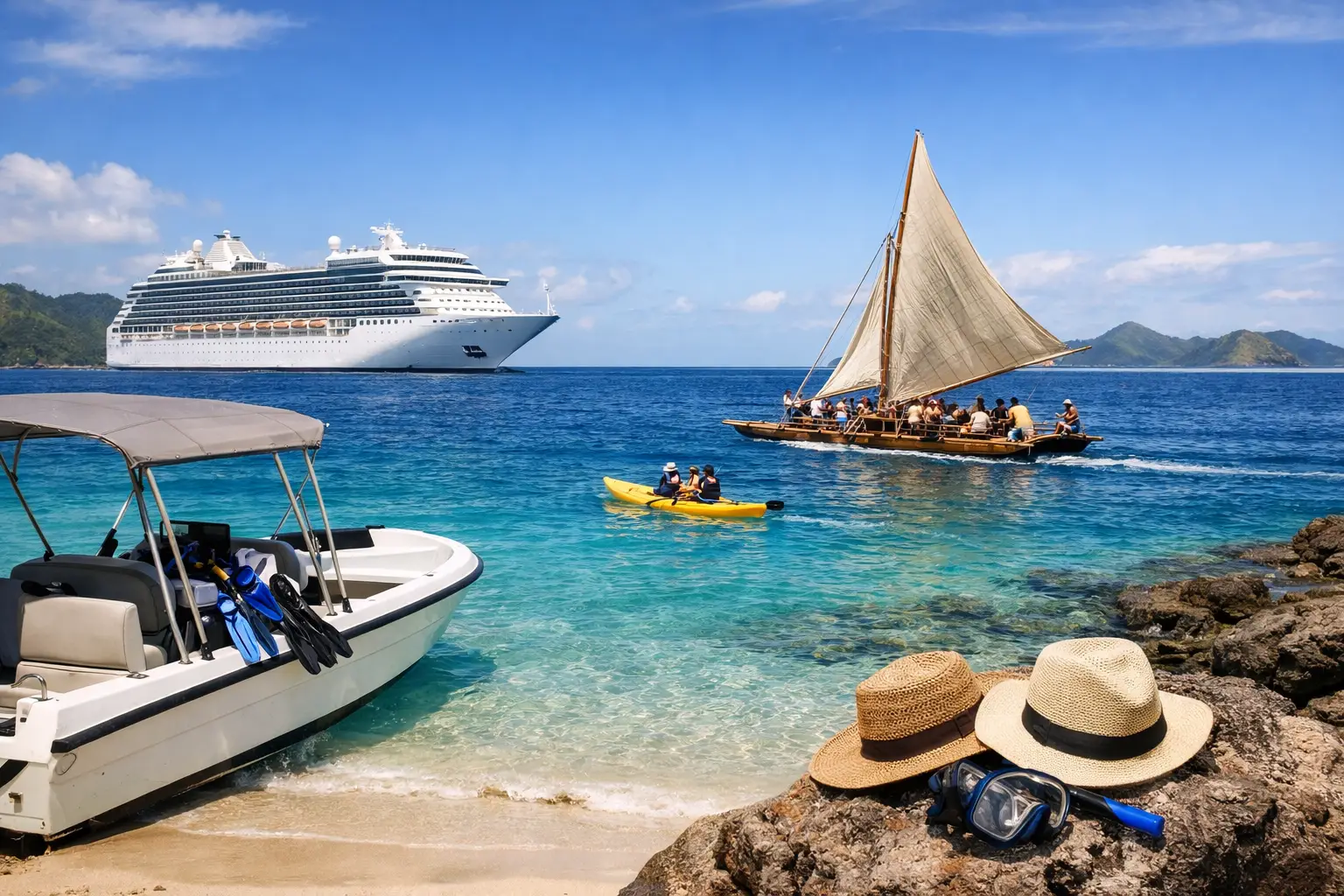
A Fiji port call can feel wonderfully unhurried until the clock starts counting down to all-aboard. The right Fiji cruise transport options turn a short day ashore into time well spent: a comfortable transfer, a guide who knows the roads and traditions, and an itinerary built around getting you back to the ship with confidence.
Fiji is made up of more than 300 islands, but most cruise visitors experience its character through a small number of busy gateways. Whether your vessel berths in Suva, calls at Lautoka, tenders into a smaller island destination, or begins or ends a fly-cruise journey in Nadi, transport needs to match the port, the available hours, and your preferred pace.
Start With Your Port, Not Just Your Wish List
A waterfall swim, village visit, market stop, river safari, or island day can all be memorable choices. Yet the practical route between the pier and the experience matters just as much. Fiji's coastal roads can be scenic and slower-moving, weather can alter sea conditions, and cruise schedules leave little room for avoidable delays.
In Suva, the capital on Viti Levu's southeast coast, guests are well placed for city sights, cultural venues, gardens, inland villages, and rainforest landscapes. Its urban setting supports a broad range of vehicle-based touring, but it also means traffic should be considered when setting departure and return times.
Lautoka, on the drier west coast, is a useful gateway to the Sugar City, Nadi-area attractions, the Coral Coast, and selected island experiences. It is also close to the airport and Denarau marina, making it especially relevant for passengers extending their stay before or after a sailing.
Smaller island calls are different. Tender operations, limited roads, and marine conditions may shape the day. Here, a well-managed local program is often more valuable than trying to arrange a series of independent connections on arrival.
The Main Fiji Cruise Transport Options
Shared Coaches for Organized Shore Touring
A shared coach is a practical choice for cruise passengers who want a structured excursion with a fixed itinerary. Guests travel together in an air-conditioned vehicle, typically with a local guide, planned sightseeing stops, and a coordinated return to the port.
This format works particularly well for cultural tours, city and market visits, accessible scenic routes, and group experiences where the journey itself is part of the day. For families and multigenerational groups, it can also remove the pressure of managing unfamiliar directions, local currency, parking, and timing.
The trade-off is flexibility. Coach tours follow a set rhythm, and individual stops are usually timed for the group. Travelers who want more time for photography, a private meal, or a specialized activity may be better served by a private arrangement.
Private Cars, Vans, and VIP Vehicles
Private transport gives couples, families, friends, and small groups the freedom to shape the day around their interests. Depending on party size and requirements, this may mean a private sedan, premium vehicle, van, or larger dedicated coach with a driver-guide.
The benefit is not simply privacy. A private program can prioritize what matters to you, whether that is a relaxed scenic drive, a cultural experience with fewer stops, time at a beach, or a carefully paced itinerary for guests with limited mobility. It is also a strong option for travelers carrying extra equipment, celebrating a special occasion, or coordinating several generations with different energy levels.
Private touring usually costs more than a shared excursion, especially for one or two guests. Its value becomes clearer for larger families and groups, where the per-person cost may compare favorably with separate excursion tickets. The key is to book an itinerary that is realistic for your exact port hours, rather than filling every minute with distant attractions.
Accessible and Pace-Conscious Transport
Accessibility is not one-size-fits-all. A guest may be able to walk short distances but need help with vehicle steps, avoid uneven paths, or prefer regular restroom breaks. Others may travel with folding wheelchairs, mobility aids, young children, or medical considerations that call for more personal attention.
Advance planning makes a meaningful difference. Share mobility needs before arrival so the appropriate vehicle, entry assistance, routing, and activity selection can be considered. Some Fiji experiences involve natural terrain, boat boarding, or village paths that may not suit every guest. A thoughtful transport plan focuses on what is comfortable and enjoyable, rather than treating an active excursion as the only way to see the destination.
Marine Transfers and Island Experiences
For many visitors, Fiji's most memorable views begin beyond the main island. A marine transfer can connect cruise guests with outer-island resorts, snorkeling locations, sand cays, and lagoon experiences. These journeys bring the color and scale of Fiji's islands into focus, but they require careful coordination with the ship's tender and departure schedule.
Sea transfers are best for guests who are comfortable on boats and have enough time ashore to allow for boarding, cruising, the activity itself, and a conservative return margin. Weather, tides, and sea state can affect operations. A responsible operator will have contingencies and will not treat marine timing as an afterthought.
For cruise lines and travel planners, marine programs also require attention to passenger flow, safety briefings, pier capacity, boat manifests, and communications between shore teams. Those details may be invisible to guests, but they are central to a well-run island day.
Why Pre-Arranged Transport Matters
It can be tempting to wait until you reach the pier and decide what to do. In a major port, local taxis may be available, and independent travel can suit confident visitors with a simple plan. But availability can vary when many passengers disembark at once, and negotiating routes, rates, or return pickup times takes time away from the destination.
Pre-arranged transport provides a clear meeting point, a confirmed vehicle, and an itinerary matched to the vessel schedule. It is particularly helpful when a ship arrives early, departs late, uses tenders, or carries a large number of passengers seeking the same popular experiences.
For independent travelers, the most useful question is not, “Can I get there?” It is, “Can I get there, enjoy it properly, and return to the port with enough time to spare?” Local teams understand where road delays occur, how long activity check-in can take, and which experiences are genuinely feasible from each port.
Transport for Pre- and Post-Cruise Stays
Cruise transport does not begin at the gangway. Travelers flying into Fiji before embarkation often need a reliable airport transfer, hotel connection, luggage support, and a clear plan for reaching the cruise terminal or marina. The same applies after disembarkation, when flight times may not line up neatly with the ship's schedule.
A private transfer is ideal for guests who want direct service between Nadi International Airport, their resort, and the port. Shared arrangements can be suitable for travelers on a set schedule, while groups may require dedicated coaches and coordinated baggage handling. A pre-cruise stay can also create time for inland touring, a Coral Coast escape, or an island resort visit that cannot fit inside a single port day.
For a fly-cruise program, the transport plan needs to connect every stage: international arrival, domestic flights if required, hotel nights, vessel embarkation, shore programs, and final airport departure. One coordinated local partner reduces handovers and gives guests a clearer point of contact if plans change.
What Cruise Lines and Groups Need Behind the Scenes
For cruise operators, shore-excursion planners, and travel advisors, transport is an operational promise as much as a guest service. Moving high passenger volumes requires correctly sized fleets, trained guides, pier-side dispatch, accessible options, accurate manifests, clear departure windows, and the ability to respond quickly to a schedule change.
The strongest Fiji cruise transport options combine this operational discipline with a genuine sense of place. A coach transfer should not feel like dead time between the ship and an activity. With the right guide, the road becomes an introduction to local life, history, landscapes, and Fijian hospitality.
Rosie Fiji Cruises brings shore-side transport, excursions, airport transfers, marine experiences, cultural touring, and group coordination together through one established Fiji-based team. That breadth is especially useful when one vessel call involves different passenger needs, from a private VIP vehicle to multiple coaches and onboard cultural entertainment.
Questions to Ask Before You Book
Before confirming any transport, ask how long the total experience lasts door to door, not just how long the featured activity takes. Confirm the meeting location, vehicle type, inclusions, mobility considerations, meal arrangements, and the planned return time to the ship.
If a tour involves water, ask what happens if weather or sea conditions change. If you are traveling with children or older relatives, ask about restroom access, walking distances, vehicle steps, and the pace at each stop. These details are not minor. They are what make a Fiji day ashore feel relaxed rather than rushed.
Choose transport that leaves room to look out the window, listen to your guide, and accept the warm welcome offered along the way. Fiji is best experienced with time to spare and a trusted plan for the journey back to sea.