
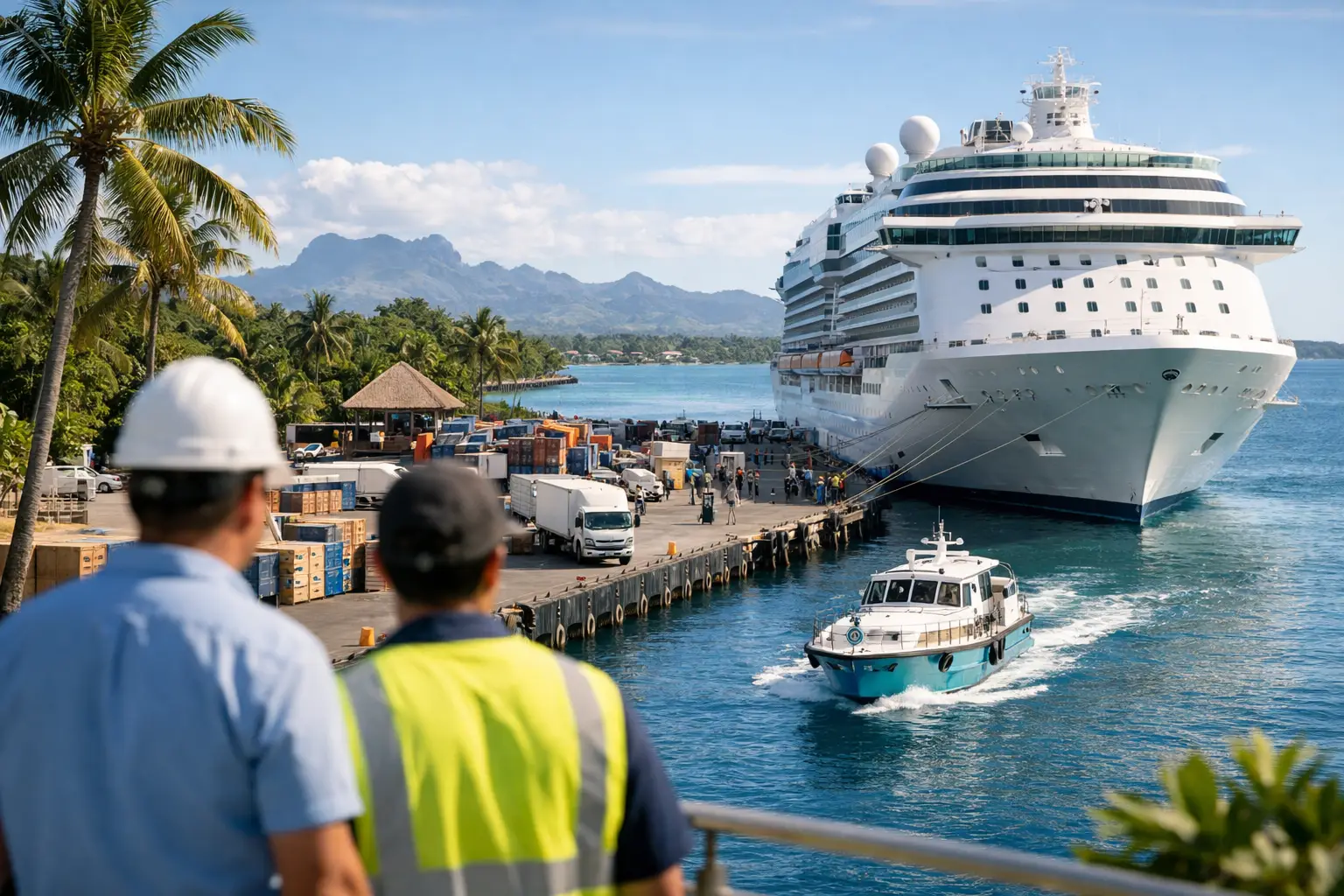
A ship may be in port for only a few hours, yet a successful Fiji call begins long before the first guests step ashore. Cruise logistics is the coordination behind that experience: vessel schedules, pier or tender operations, vehicle movements, guide briefings, guest requirements, tour timing, and the carefully protected return to ship.
For passengers, the result should feel effortless. A friendly local welcome, a clearly organized departure point, and time to experience Fiji's villages, forests, coastlines, or island waters without watching the clock. For cruise lines and travel partners, the work is more exacting. Every moving part must be planned for volume, safety, changing conditions, and the non-negotiable ship departure time.
What Cruise Logistics Covers in Fiji
Shore operations are more than booking a bus and selecting an attraction. A Fiji port call can involve thousands of guests with different interests, mobility levels, languages, dining needs, and expectations. Some are seeking a relaxed cultural introduction; others want a private vehicle, an inland 4WD adventure, or time on the water. Each experience needs to fit the vessel's arrival and all-aboard schedule.
Effective cruise logistics brings these needs together under one local operating plan. That includes berth-side or tender-side coordination, tour dispatch, professionally briefed guides, reliable transport, guest counts, confirmation procedures, and clear communication between the ship, port teams, and shore suppliers. Pre- and post-cruise arrangements matter as well, particularly for fly-cruise guests who need airport transfers, accommodation support, touring, or a tailored Fiji extension before or after sailing.
The local dimension is essential. Road conditions, weather patterns, seasonal demand, public events, marine access, and the pace of a destination can all affect a day's plan. A Fiji-based team understands what is realistically achievable, not simply what looks appealing on an itinerary.
The Port Day Has No Room for Assumptions
Cruise operations are built around fixed windows, but conditions around a port call can change quickly. A delayed arrival, altered berth, tender schedule, rain shower, traffic disruption, or a guest requiring additional assistance can create pressure across the program. The best response is not improvisation alone. It is having the right people, vehicles, communication channels, and contingency plans already in place.
Arrival and guest flow
The first minutes ashore shape guests' confidence in the entire destination. Signage must be easy to understand, staff need accurate tour information, and departure areas must avoid unnecessary congestion. For large groups, vehicles are staged in the correct order and guides are ready to receive guests at the agreed time.
This is especially important when multiple tours depart together. A well-managed flow helps families, older travelers, and first-time visitors feel looked after without making the experience feel overly rigid. It also gives cruise partners confidence that passenger movement is controlled and visible from the moment guests arrive ashore.
Transport that matches the itinerary
Fiji experiences can require coaches, minivans, private sedans, 4WD vehicles, boats, or a combination of transport modes. The right choice depends on party size, route, luggage, mobility requirements, and available time. A scenic inland program, for example, may need different vehicle capability and a different timing allowance than a coastal sightseeing tour.
Vehicle allocation should never be an afterthought. It affects comfort, access, guide placement, departure sequencing, and the ability to recover time if conditions change. For VIP guests and small groups, private transport also allows a more flexible pace while retaining the operational assurance of a managed return to port.
Experiences designed around real timing
A memorable shore excursion is not necessarily the one that travels the farthest. It is the one that gives guests meaningful time in place and returns with a sensible buffer. Fiji's cultural traditions, tropical landscapes, and marine environments deserve more than a rushed stop for photographs.
That is why timing needs to be assessed from the pier outward. How long does it take to board vehicles? Is there a tender transfer? How much time is required at the activity site? What happens if a guest arrives late, or if weather changes an outdoor component? The most reliable programs build these practical questions into the guest experience rather than treating them as exceptions.
Why Local Knowledge Changes the Outcome
A destination management partner is not simply an intermediary between a ship and a list of tours. The role is to connect visitors with Fiji in a way that respects both the destination and the realities of cruise operations.
Local guides give context to what guests see, from Fijian welcome traditions and village life to the significance of the land and sea. Local operating relationships also make coordination more dependable. A trusted team knows which routes work best at certain times, how to plan an appropriate cultural visit, when a marine activity is suitable, and how to adjust an itinerary without sacrificing guest care.
Rosie Fiji Cruises draws on destination-management experience built in Fiji since 1974, bringing shore excursions, transport, cultural programming, and cruise support together through one locally established operation. That breadth matters when a cruise line needs to serve a full vessel, while a travel advisor needs a private program for a family or a couple extending their stay.
Planning for Different Guests, Not an Average Guest
Not every visitor comes ashore with the same priorities. A couple may want a refined private day with a guide and driver. A multigenerational family may need easy walking, reliable facilities, and a program that keeps different ages engaged. Active travelers may prefer a waterfall route, river activity, or an island excursion. Others may be most interested in a cultural performance, local cuisine, or a relaxed scenic drive.
Good cruise logistics makes room for those differences without losing control of the overall operation. This starts with accurate product information: activity level, transfer time, what to wear, likely weather exposure, facilities, and any restrictions. Clear expectations prevent disappointment and help guests choose an experience suited to their time in port.
Accessibility and guest support should be discussed early, not addressed at the departure point. Mobility needs, dietary requirements, child seating, language support, and special celebrations can often be accommodated when they are known in advance. The trade-off is that highly customized arrangements require more planning and may not suit every short port call. A capable local operator can advise when a private option is worthwhile and when a carefully scheduled shared program is the better choice.
Risk Management Is Part of Hospitality
Guests should remember the warmth of their Fiji welcome, not the operational work behind it. Still, that work is central to responsible shore delivery. It includes supplier standards, guide training, vehicle checks, passenger manifests, emergency contacts, weather monitoring, and communications during the day.
Marine and outdoor programs require particular judgment. Conditions can be beautiful at the port yet unsuitable farther offshore or in an exposed area. In those cases, changing the plan is not a failure of service. It is a commitment to safety and an opportunity to offer an alternative that still feels distinctly Fijian.
Return-to-ship management is equally important. Tour leaders need clear check-in processes, realistic travel buffers, and a defined escalation path if an issue arises. The goal is calm, informed action, not last-minute urgency. For cruise operators, this discipline protects the schedule. For guests, it protects the pleasure of the day.
Pre- and Post-Cruise Support Extends the Experience
Fiji often rewards travelers who can stay beyond a single port call. A pre-cruise arrival can include airport meet-and-greet, private transfers, hotel coordination, or a guided introduction to the destination. After a voyage, guests may wish to add an island stay, a marine experience, a cultural tour, or an inland safari before flying home.
These arrangements have their own logistical requirements, especially when international flight times, luggage, accommodation check-in, and group movements are involved. Coordinating them through a destination-based provider reduces handoffs and gives travelers one point of support across more of their journey.
For incentive groups, wedding parties, and conference delegates, that same coordination can expand to arrival transport, organized activities, Fijian entertainment, dinners, and event movement. The scale may change, but the principle remains the same: thoughtful planning should make each guest feel personally welcomed.
A Fiji port day is brief, but it can create a lasting connection when the details are handled with care. Choose experiences that allow time to be present, work with people who know the destination beyond the map, and leave enough room in the plan for Fiji to be enjoyed at its own generous pace.