
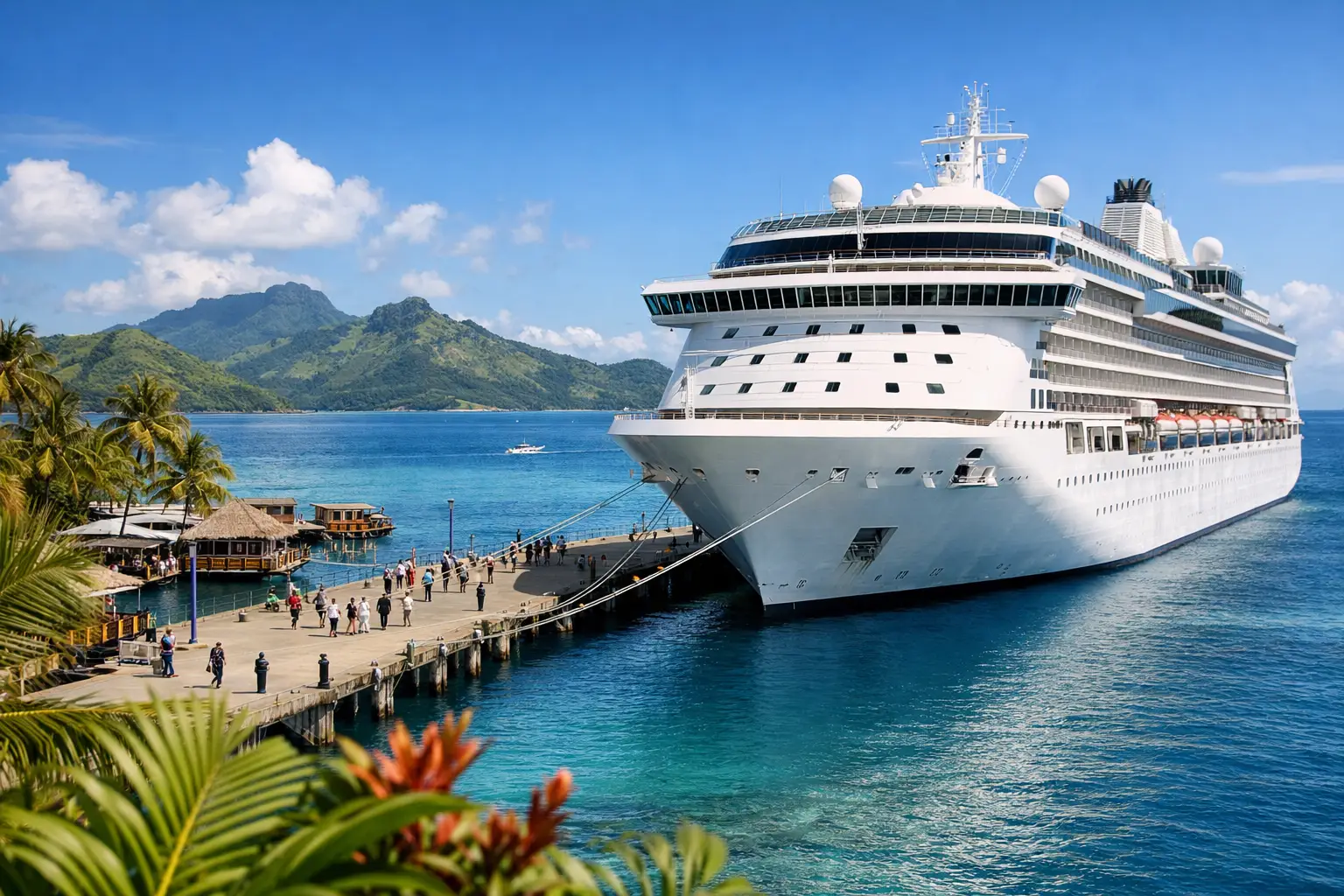
A Fiji turnaround is far more than a ship arriving, guests disembarking, and new passengers stepping aboard. It is a tightly timed handover involving port access, airport movements, baggage, crew requirements, provisioning, guest care, and the first or final impression of Fiji. This Fiji cruise turnaround guide is designed for cruise planners and travel partners who need each part of that handover to work with confidence.
For guests, a well-managed turnaround should feel gracious and uncomplicated. For the ship and its shoreside teams, it depends on detailed planning well before sailing day. Fiji's warm welcome is most memorable when the operational work behind it is equally dependable.
What makes a Fiji cruise turnaround different?
Fiji is a long-haul destination for many cruise guests. That makes arrival and departure days especially significant. Passengers may be connecting through Nadi International Airport after an overnight flight, extending their stay at a resort, or joining a fly-cruise itinerary that combines island time with their voyage. Their needs can range from private VIP transfers to carefully managed coach movements for large groups.
Turnaround planning also needs to reflect the vessel's port, berth schedule, passenger count, time in port, and seasonal conditions. Nadi is Fiji's principal international air gateway, while cruise operations may involve ports such as Lautoka or Suva depending on the itinerary and vessel requirements. Airport, hotel, port, and transport timing must work as one plan rather than a sequence of separate bookings.
There is no single formula for every turnaround. A smaller premium vessel with many independent travelers requires a different approach from a large ship handling thousands of guests. The common requirement is clear accountability: every movement, guest touchpoint, and contingency needs an experienced local owner.
Start the Fiji cruise turnaround plan early
The strongest turnaround days are built weeks and months ahead. Cruise line teams should share preliminary passenger counts, arrival and departure manifests, crew requirements, luggage procedures, flight information, mobility needs, and expected service windows as early as possible. Figures will change, but early visibility allows a local ground handler to reserve the right vehicles, guides, meet-and-greet personnel, and operational support.
Build one working schedule
A master schedule should identify the key moments from the first airport arrival through to all-aboard. It should cover flight banks, transfer departure windows, hotel check-out times, terminal access, baggage staging, embarkation periods, crew transfers, provisioning deliveries, shore-excursion return times, and final port security deadlines.
This schedule is also where practical trade-offs become clear. A late-morning flight arrival may not leave enough margin for a scenic inland tour before embarkation. A guest arriving a day early, however, may have time for a resort stay, a cultural experience, or a marine excursion. Giving passengers realistic options protects both their experience and the ship's sailing schedule.
A single coordination point helps avoid the most common breakdown: one supplier working from an airport timeline, another from a hotel timeline, and the vessel from a port timeline. Everyone should be working from the same current version of the day.
Match transport to real guest needs
Vehicle planning is not just about total seat numbers. It should account for luggage volume, flight arrival patterns, families traveling together, guests with limited mobility, and the service standard expected by the cruise line. A transfer plan may include shared coaches for high-volume movements, private cars for suite guests, accessible options where required, and dedicated vehicles for crew or operational personnel.
Drivers and meet-and-greet teams need current manifests and clear instructions on where to receive guests. For international visitors who have just completed a long journey, a calm, visible welcome and a direct explanation of the next step can make a meaningful difference. This is where local hospitality and disciplined logistics belong together.
Manage embarkation and disembarkation as guest experiences
A turnaround is often a guest's first or last day in Fiji. It should not feel like time spent waiting in a parking area or navigating an unfamiliar city without support. Thoughtful planning turns necessary transfer time into a well-cared-for travel day.
For disembarking passengers with later flights, consider their available hours, luggage arrangements, mobility, and appetite for activity. Some may prefer a relaxed hotel day-use option and airport transfer. Others may be looking for a guided city visit, cultural experience, or a scenic journey that fits comfortably within their flight window. The right choice is based on confirmed logistics, not simply on how attractive an activity sounds.
Embarking guests need an equally deliberate approach. Pre-cruise stays can be coordinated with airport transfers, hotel accommodations, optional touring, and port transportation. Guests should receive clear pick-up times, luggage guidance, meeting-point details, and a contact process if flights change. In a destination where travelers may cross several time zones before arrival, simple communication is a form of service.
Protect the time buffer
Fiji offers extraordinary places to see, but turnaround day is not the time to overpack an itinerary. Road conditions, weather, airport processing, port procedures, and guest readiness all affect timing. Build buffers around transfers and schedule activities only where there is a genuine, comfortable window.
This is particularly relevant for guests traveling from Nadi to a ship in another port area, or those returning from a day tour before embarkation. A trusted local operator will advise when an experience is suitable and when a more relaxed option is the better choice. Being conservative with timing is not limiting Fiji. It is protecting the guest's holiday and the ship's departure.
Coordinate the operational details behind the scenes
Passenger movements are highly visible, but a turnaround also relies on work guests may never see. Cruise operations can require support for crew transfers, hotel arrangements, transport, local staffing, cultural entertainment, group movements, and last-minute itinerary adjustments. Requirements vary by vessel and port, so the operational plan should be tailored rather than assumed.
Clear local communication is valuable when schedules move. Flight delays, weather changes, altered passenger counts, or revised vessel instructions can quickly affect multiple suppliers. A destination-management partner with established transport resources, trained teams, and 24/7 support can respond from within Fiji rather than trying to solve a local issue remotely.
For cruise lines and travel advisors, this also reduces the complexity of managing multiple independent providers. Ground transport, pre- and post-cruise programs, shore experiences, airport assistance, and onboard Fijian entertainment can be aligned through one coordinated operating plan. Rosie Fiji Cruises brings this approach to ship calls and turnaround programs, supported by local destination experience developed over decades.
Give guests a meaningful taste of Fiji
Not every turnaround guest has time for an island day, and that is perfectly reasonable. Fiji experiences should be selected according to the time actually available. A short window may suit a guided cultural visit, a local city orientation, or a relaxed transfer with a well-chosen stop. A longer pre- or post-cruise stay can open up marine experiences, outer-island escapes, inland 4WD adventures, village and cultural programs, or private touring.
The most successful programs do not treat every traveler the same. Couples may value privacy and a curated pace. Multigenerational families often need flexible timing and easy access. Incentive groups may require synchronized transportation, hosted activities, and traditional entertainment. VIP travelers may prefer private airport assistance and discreet, direct transfers.
Authenticity matters, but so does respect. Fijian culture is best introduced through knowledgeable local guides and well-managed encounters that give guests context, warmth, and appropriate time to engage. A rushed photo stop rarely carries the same value as an experience thoughtfully built into the guest journey.
Prepare for change without losing the welcome
The test of a turnaround plan is often what happens when the original plan changes. Passenger totals can shift. Flights can arrive late. A guest can miss a transfer. Weather can influence planned activity. The right response is not to promise that every variable can be controlled, but to have decision-makers, available transport, and practical alternatives ready.
Before sailing day, confirm escalation contacts, communication channels, final manifests, vehicle allocations, and contingency procedures. On the day, keep cruise staff informed with concise, useful updates. Guests should receive reassurance and clear next steps, not operational noise.
When Fiji is managed with care from runway to gangway, passengers carry away more than a successful transfer. They leave with time to feel the warmth of the islands, confidence that they were looked after, and a reason to return with a little more time to explore.