
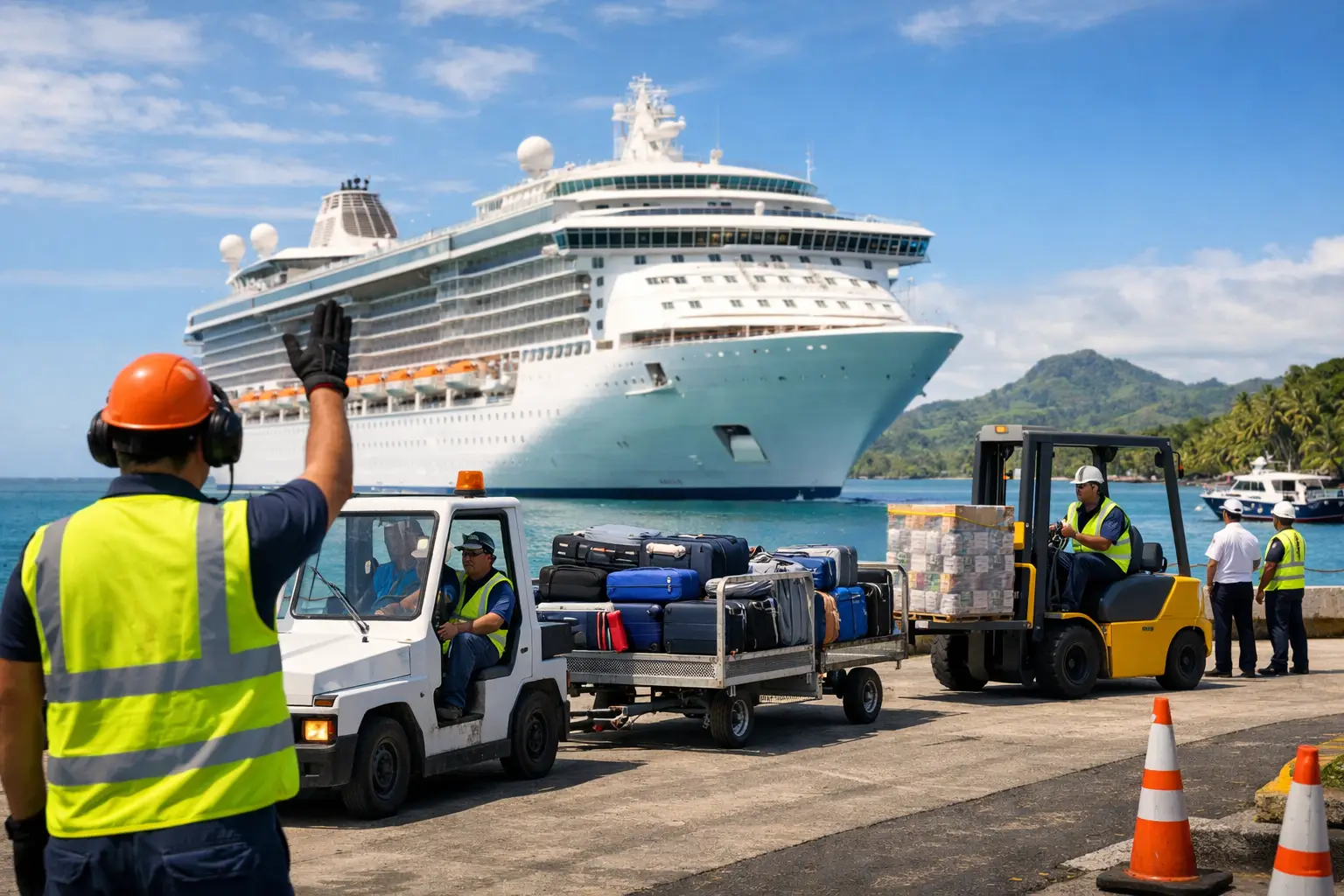
A cruise call in Fiji may last only one day, but the work behind a rewarding shore experience begins well before the ship reaches port. Fiji cruise ship ground handling is the coordination that turns a short port stay into a well-run day of discovery - from the first guests leaving the pier to the final coaches returning on schedule.
For cruise lines, planners, and travel partners, the objective is not simply moving passengers from one point to another. It is delivering a safe, welcoming, culturally meaningful Fiji experience while managing vessel schedules, port procedures, traffic conditions, guest mobility needs, and changing weather. For passengers, it should feel easy: clear directions, capable local hosts, reliable transport, and time to enjoy the destination rather than worry about the logistics.
What Fiji Cruise Ship Ground Handling Covers
Ground handling is the shore-side operating system for a vessel call. It brings together transport, guides, tour dispatch, passenger flow, port coordination, and real-time support under one local plan. The scope depends on the ship, the port, the excursion program, and the number of guests ashore, but every element needs to work to the same clock.
At a busy call, this can include greeting teams at the pier, coach marshaling, signage and guest check-in, guide allocation, water and refreshments where required, luggage or special-equipment coordination, and active communication with shipboard and port contacts. It also includes the less visible work: confirming supplier readiness, monitoring tour departures, adjusting for congestion, and ensuring each vehicle has a realistic route and return time.
This matters particularly in Fiji, where an itinerary may combine urban ports, coastal roads, village visits, rainforest settings, island transfers, and marine activities. The distance shown on a map is only one part of timing. Road conditions, local events, tides, weather, and the pace appropriate for a cultural visit all need to be considered before guests board a coach.
A Port Day Has No Room for Guesswork
Cruise operations run on precise schedules. A late departure from the pier can compress an excursion. A delayed return can create concern for guests and operational pressure for the vessel. Strong ground handling builds realistic timing into the day rather than assuming every transfer will run perfectly.
That begins with advance planning. Local operators assess vessel arrival and all-aboard times, berth or tender arrangements, passenger volumes, tour capacities, and the mix of shore activities. A small private group seeking a scenic drive has different needs from several hundred guests departing across multiple coaches for cultural tours, river adventures, city sightseeing, or beach experiences.
The right plan also includes contingencies. Fiji's weather can change quickly, and marine conditions may affect island or lagoon activities. A capable ground team knows when an alternative itinerary is sensible, how to communicate an adjustment clearly, and how to keep guests cared for without losing the spirit of the day. Flexibility is valuable, but it must be organized flexibility.
Managing high-volume guest movements
Moving large numbers of passengers requires more than a fleet of vehicles. Coaches must arrive in the right sequence, drivers must know their loading areas, guides must have final manifests and instructions, and guests need straightforward information from the moment they step ashore.
Clear passenger flow prevents the small delays that can become major issues at scale. Dedicated dispatch staff can direct guests to the right departure point, assist those needing extra time or mobility support, and keep tour groups moving without making the welcome feel rushed. The best operations are efficient while still distinctly Fijian in their warmth.
For cruise lines and shore-excursion teams, this consistency protects the guest experience and the vessel schedule. For travelers, it means less time searching for a coach and more time experiencing Fiji's markets, coastlines, communities, and island landscapes.
Local Knowledge Is an Operational Advantage
A Fiji itinerary should be more than a checklist of attractions. It should reflect the character of the destination while respecting the practical limits of a port day. That calls for local knowledge that reaches beyond a route plan.
Experienced teams understand which experiences suit a six-hour window, which require more generous transfer time, and where guests can enjoy an authentic visit without putting pressure on a host community. They know how to pair activities with the right guide, whether that means a cultural storyteller, a nature-focused host, or a driver-guide who can make a scenic journey engaging.
Cultural care is also part of responsible ground handling. Village and community visits require appropriate protocols, respectful guest preparation, and coordination with local hosts. When managed well, guests gain a genuine connection to Fiji rather than a staged stop, and communities receive visitors in a way that works for them.
There are trade-offs. An island excursion may offer spectacular water and a slower pace, but it depends on marine timing and conditions. An inland safari can reveal a different side of Fiji, but it may not suit every mobility level. A well-designed shore program gives guests choices while making those considerations clear from the start.
Transport, Guides, and Support Must Work as One
Transport is often the most visible part of cruise ground handling, yet it cannot operate in isolation. Vehicles, drivers, guides, dispatchers, and excursion suppliers need one shared operating plan. When an itinerary changes, every person involved needs accurate information quickly.
This is where an established destination management partner offers a practical advantage. A broad local transport network can support standard coach movements alongside private vehicles, VIP transfers, family groups, and guests requiring a more tailored pace. It can also connect a cruise call with pre- and post-cruise arrangements, airport transfers, hotel stays, and extended Fiji touring.
Rosie Fiji Cruises brings this full-service approach to shore-side operations, combining cruise facilitation with local guides, transport coordination, cultural experiences, and ongoing support. The value is not just the range of services. It is having one accountable Fiji-based team coordinating the people and details behind the guest experience.
Designing for different guests
A successful port program recognizes that passengers do not all travel the same way. Some want an active day on the water. Others prefer air-conditioned sightseeing, a relaxed cultural program, or private touring with more flexibility. Families may need practical timing and easy access, while multigenerational groups may value a balance of comfort, scenery, and meaningful activities.
Accessibility and mobility should be addressed early, not treated as an afterthought at the pier. Guests may need minimal walking, step-free options where available, closer vehicle access, or additional assistance during boarding. Setting realistic expectations helps cruise partners recommend the right experience and helps travelers enjoy their day with confidence.
Why 24/7 Local Support Matters
Even carefully planned operations can face unexpected changes. A ship's arrival time may shift. Rain may affect an outdoor activity. A guest may miss a meeting point, need medical assistance, or require a different transport arrangement. In those moments, a local response team is not an added extra. It is central to good service.
Around-the-clock support means decisions can be made close to the operation, with current knowledge of the port, roads, suppliers, and available resources. It also gives cruise staff and travel partners a clear point of contact rather than a chain of separate vendors trying to solve one issue independently.
For passengers, this reassurance is simple but meaningful. They are welcomed by people who know Fiji, understand the itinerary, and are there to help if plans change. That confidence lets guests focus on the reason they came ashore: to experience the warmth, beauty, and living culture of the islands.
Choosing a Fiji Ground Handling Partner
For cruise lines and travel trade partners, the right question is not only whether a provider can operate a tour. It is whether they can manage the full port-day picture. Look for proven local infrastructure, trained guides and drivers, credible capacity for high-volume calls, clear safety practices, and the ability to coordinate transport, excursions, and guest support as one operation.
It is equally useful to ask how the operator manages contingencies, communicates with shipboard teams, works with local communities, and accommodates different passenger needs. A partner with a long-standing presence in Fiji can bring established supplier relationships and a practical understanding of what will work on the day - not just what looks appealing in an itinerary.
For travelers, choosing an organized shore experience can be especially worthwhile when port time is limited. A well-managed program provides structure without taking away the pleasure of discovery, and it reduces the uncertainty of arranging transport and timing independently in an unfamiliar destination.
The best Fiji port days leave room for a warm welcome, an unhurried moment of connection, and the confidence that someone is watching the clock. When shore-side details are handled with care, guests can step back aboard with memories of Fiji that feel far larger than a single day ashore.