
Momi Gun Site tour
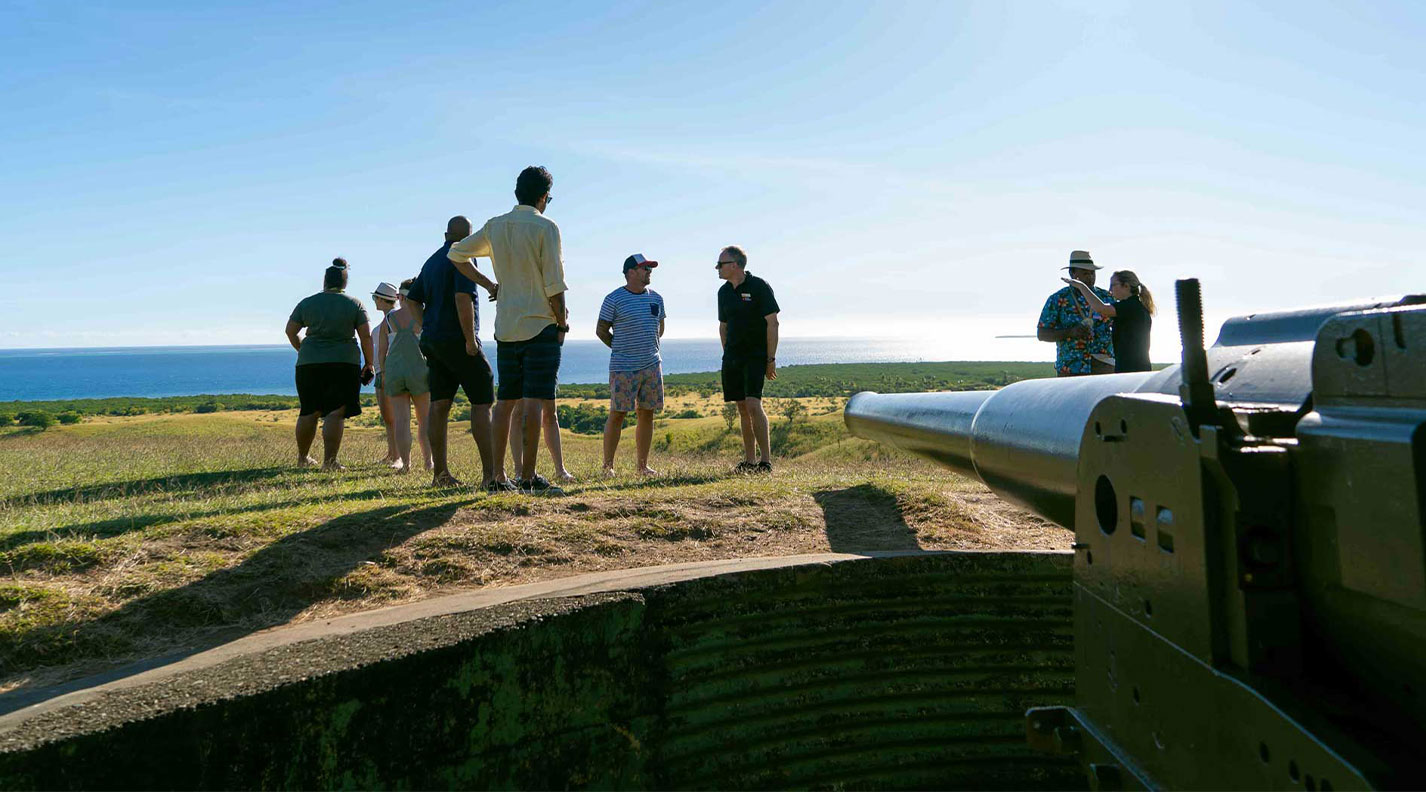
The road leaves the Queens Highway and climbs through fields of sugarcane, past tin-roofed homes and the laughter of village kids. As you crest the last rise, the sea opens like a postcard—Momi Bay spread wide and bright—and you finally see them: two long, green barrels keeping a silent watch over the reef.
Once, these guns were Fiji’s first line of defense.
In 1940, with war darkening the Pacific, engineers and soldiers hauled steel and concrete up these hills to build a battery that could guard Navula Passage, one of the few deep cuts in the reef where enemy ships might slip through to threaten Nadi’s airfield and the ports at Lautoka and Nadi Bay. The work was a true Pacific alliance: Fiji Defence Force and Fiji Public Works led construction, supported by local hands from the Momi area, and later joined by New Zealand and U.S. troops who trained the gunners and strengthened the fortifications. Two 6-inch naval guns, each roughly 7 meters long and weighing about 7.5 tonnes, were planted here—capable of throwing a 45 kg shell more than 14 km out to sea.
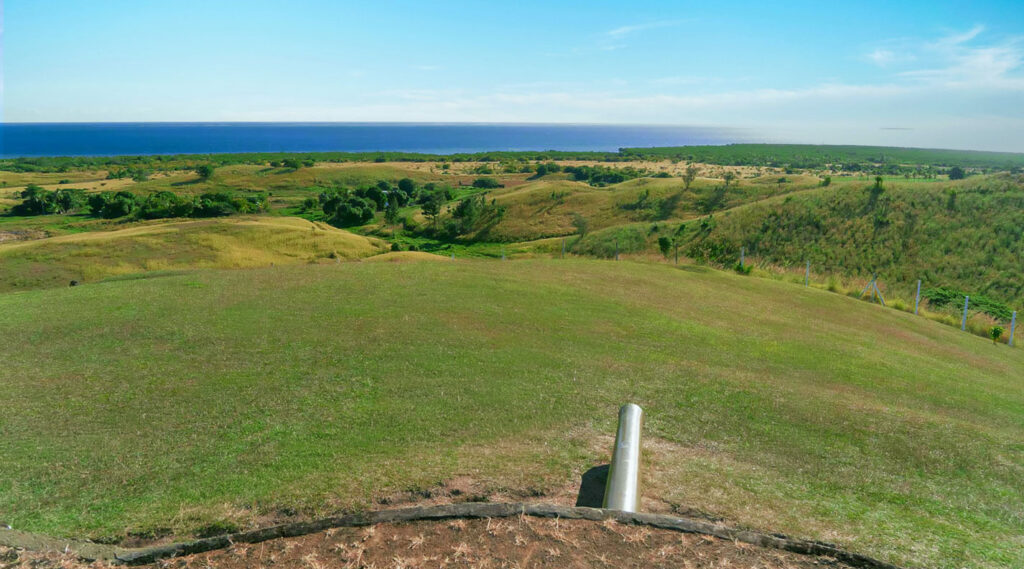
Walk the ridge and you can trace the battery’s heartbeat: the fire control post and range-finder, the armory room, the command dugouts, and the ringed emplacements that still command the horizon. The wind carries salt and grass. The view is so beautiful it’s almost disarming—until you remember why these guns were built.
The war came close, but it never quite landed here. In 1943, with alarms echoing across the bay, the gunners fired two warning shots at an unidentified contact—and then the hills fell quiet again. Not long after, as the tide of war turned elsewhere, the battery went still; by February 1944, it stood down. Today, restored and protected as Momi Battery Historic Park, the site tells that story with clarity and pride.
From a Tour Guide's Perspective
By: Eroni Bole

From the ridge, the view is breathtaking—sugarcane fields rolling into the sea, villages dotted along the coast, and the reef glimmering in the sun. This is one of my favorite spots to take a photo, because it captures both the beauty of Fiji and the reason why this site was so important.
At the end of the walk, I hope you’ll feel what I feel every time I’m there: pride in our history, respect for those who stood guard, and gratitude that today we can enjoy this place in peace.
A time to breathe in the ocean air, and let the story of the Momi Gun Site sink in. It’s not just a stop on a tour—it’s a chapter of Fiji’s story waiting for you to experience.