
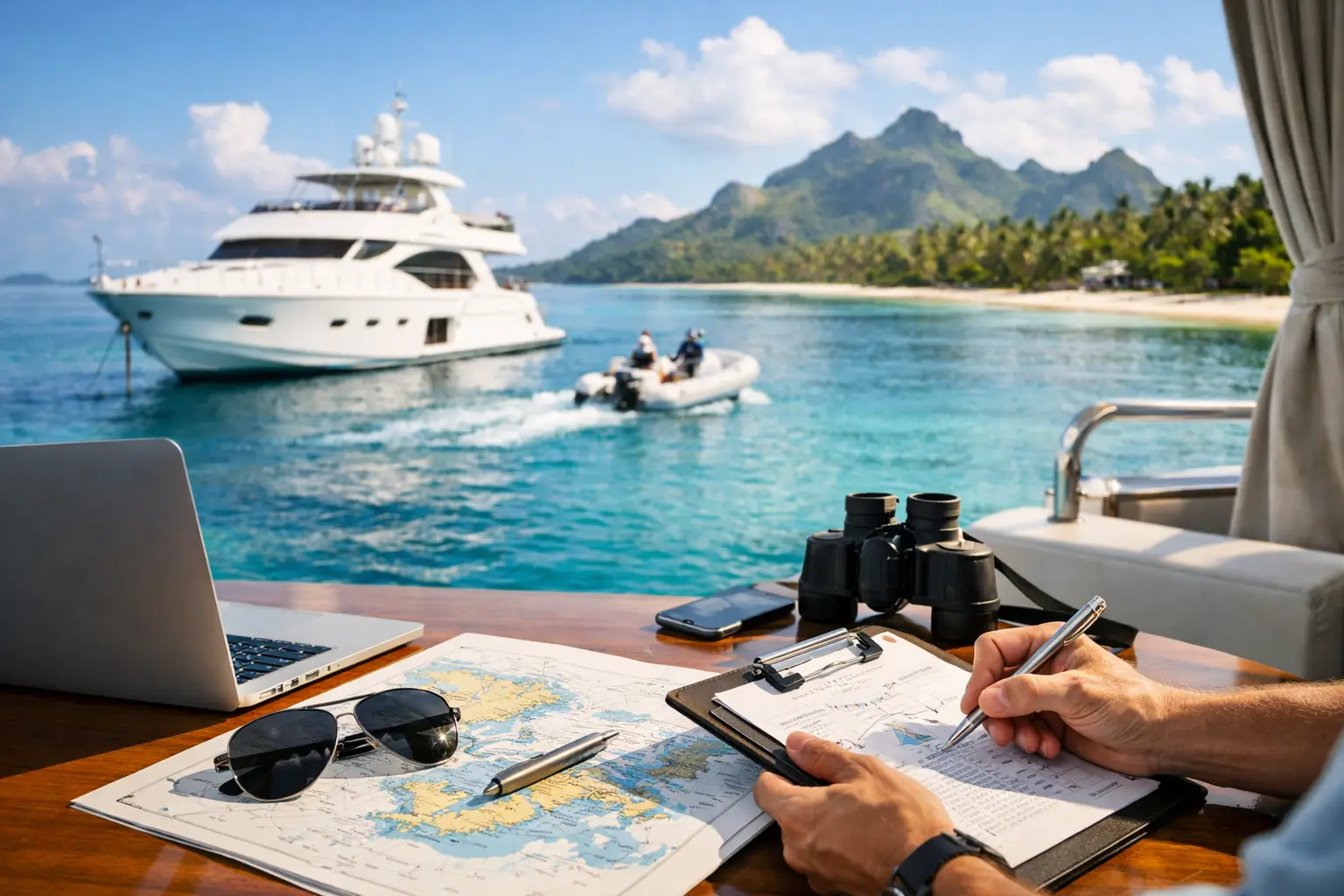
A cruise ship’s arrival window can turn a visitor’s first view of Fiji into a finely timed operation. Coaches need to be positioned, guides briefed, experiences confirmed, and guests met with the same warmth whether there are 20 people or 2,000. Fiji charter logistics is the work that makes that welcome possible: coordinating people, vehicles, vessels, schedules, luggage, permits, and local partners so precious time ashore is spent experiencing the destination rather than waiting for it.
For cruise lines, travel advisors, charter planners, and guests traveling on limited schedules, the value is not simply transport from one point to another. It is a local team that understands what happens between the published itinerary and a successful day in port.
Fiji Charter Logistics Begins Before Arrival
Reliable operations start well before a ship anchors or a charter group touches down. A practical plan considers the port, berth or tender arrangements, arrival and departure times, passenger counts, excursion durations, mobility needs, weather patterns, road conditions, and the time required to return every guest comfortably and safely.
Fiji is wonderfully varied, and that variety affects planning. A coastal experience near a major port may be well suited to guests with only a few hours ashore, while a village visit, waterfall outing, island day, or inland 4WD safari requires a more considered transfer plan. The right choice depends on available time, the group’s interests, and how much flexibility the vessel schedule allows.
For a charter operation, the details are interconnected. A delay in disembarkation can affect coach departures. A change in weather can influence a marine experience. A special request for VIP transport, child seating, accessible assistance, or luggage handling needs to be known early enough to be properly arranged. Strong local coordination anticipates these points rather than treating them as last-minute problems.
Port Calls Need More Than Great Excursions
An appealing shore excursion is only one part of a successful port day. Behind it sits a coordinated ground operation: guest meeting points, signage, guide allocation, vehicle dispatch, passenger counts, communication channels, timing checks, and a clear return-to-port process.
This is particularly significant when a vessel carries a large number of guests choosing different activities. Some may be heading to a cultural program, others to a resort day, a scenic coastal drive, or a private tour. Each group requires accurate manifests and departure control, but the guest experience should still feel personal. Travelers should know where to go, who is looking after them, what to expect, and when they will return.
Experienced Fiji-based teams also bring judgment to routing. The fastest route is not always the best route if it creates unnecessary pressure or misses the character of the destination. Conversely, a beautiful but distant attraction may not be appropriate for a short port call. Good logistics protect both the schedule and the quality of the experience.
Managing changing conditions ashore
Cruise schedules can change. Tender operations may take longer than expected, traffic can build near busy arrival areas, and tropical weather sometimes calls for adjustments. These moments reveal whether a plan is merely a schedule on paper or a properly managed operation.
Contingency planning should include realistic turnaround times, alternative activity options where appropriate, dependable communications with guides and transport teams, and a clear escalation process. The goal is not to promise that conditions will never change. It is to respond calmly, keep the relevant people informed, and preserve a positive experience for guests.
Transport Is a Guest Experience, Not a Transfer Gap
For many visitors, the drive from port or airport is their first close look at Fiji. It should feel organized, comfortable, and welcoming, whether guests are traveling in a shared coach, private sedan, premium vehicle, or a coordinated fleet for an incentive group.
The transport plan needs to match the operation. Large passenger volumes call for coach staging, loading procedures, dispatch discipline, and drivers who know the route and timing expectations. Smaller groups may benefit from private vehicles and more flexible touring. Families, multigenerational travelers, and guests with limited mobility may need a different pace, easier access, or more time at each stop.
For fly-cruise arrangements, the connection between airport, hotel, port, and post-cruise touring deserves the same attention as the sailing itself. Guests arriving after a long international journey want clear instructions and a reassuring local welcome. Guests departing after a voyage need transfer timing that respects check-in requirements while leaving room, where possible, for a final Fiji experience.
Rosie Fiji Cruises brings cruise support together with a wider destination-management network, allowing itineraries to extend beyond the pier with coordinated transfers, touring, cultural entertainment, and tailored guest care.
The Local Knowledge Behind Better Timing
A Fiji itinerary is stronger when it is built around real operating knowledge, not only map distances. Local teams understand how long it takes to load a group, where coaches can safely turn, which venues can host larger numbers, and how seasonal conditions may affect a route or marine transfer.
That knowledge also helps create more respectful cultural experiences. A village or community visit should be arranged thoughtfully, with appropriate protocols, hosts, timing, and group sizes. Traditional Fijian entertainment should feel like a genuine welcome rather than a generic addition to an itinerary. When logistics and cultural care are planned together, guests gain a richer sense of place and local partners are treated with respect.
There is a commercial benefit as well. Cruise lines and travel planners need suppliers who can make accurate recommendations about capacity, timing, and operational feasibility. A plan that looks attractive but cannot be delivered consistently does not serve the guest or the brand. Local expertise helps set expectations that are ambitious, realistic, and dependable.
Planning for Private Charters and Groups
Private charter guests, corporate groups, wedding parties, and incentive travelers often expect a higher degree of personalization. Their Fiji charter logistics may involve a tailored airport welcome, dedicated vehicles, special dining arrangements, private island experiences, guided touring, onboard entertainment, and coordinated departures across several locations.
The central question is not simply, “What can this group do?” It is, “How should the full movement of this group be designed?” A program may need to account for flight arrivals at different times, room access, luggage movement, dietary needs, VIP requirements, and guests who prefer a gentler activity while others choose adventure.
A single local coordinator can make a meaningful difference here. Rather than asking an organizer to manage separate transport, activity, entertainment, and event contacts, a destination-management partner can align the moving parts around one run sheet and one standard of guest care. That structure becomes especially valuable when plans change or a group’s needs become more specific on the ground.
What strong operational planning looks like
A well-managed charter plan is visible in the guest experience, even when guests never see the operational work behind it. They are met at the right place. Their guide is ready. Their vehicle is appropriate. The day moves at a comfortable pace. They return with time to spare and the confidence that someone has been watching the details.
For trade partners, the same quality is reflected in accurate confirmations, practical recommendations, clear operational information, responsive local support, and honest advice about what can be achieved within the available schedule. Dependability is built through repeatable processes, trained people, and relationships across the destination.
Choosing the Right Level of Support
Not every Fiji visit requires the same logistics model. An independent couple may only need a private transfer and a carefully timed day tour. A large cruise call may require multiple excursion programs, a substantial vehicle allocation, pier-side coordination, and real-time operational oversight. A charter group may need an end-to-end program from arrival through departure.
The right approach depends on passenger volume, port time, the desired experience level, budget, and the consequences of a missed connection. The more fixed the schedule and the more guests involved, the more valuable it becomes to work with a partner that can coordinate the entire journey rather than one isolated component.
Fiji rewards travelers who have time to slow down, meet its people, and enjoy its islands, culture, and landscapes. Thoughtful logistics create that time. With the right plan behind every arrival, transfer, and shore experience, guests can focus on the part of the journey they will remember: being welcomed in Fiji.