
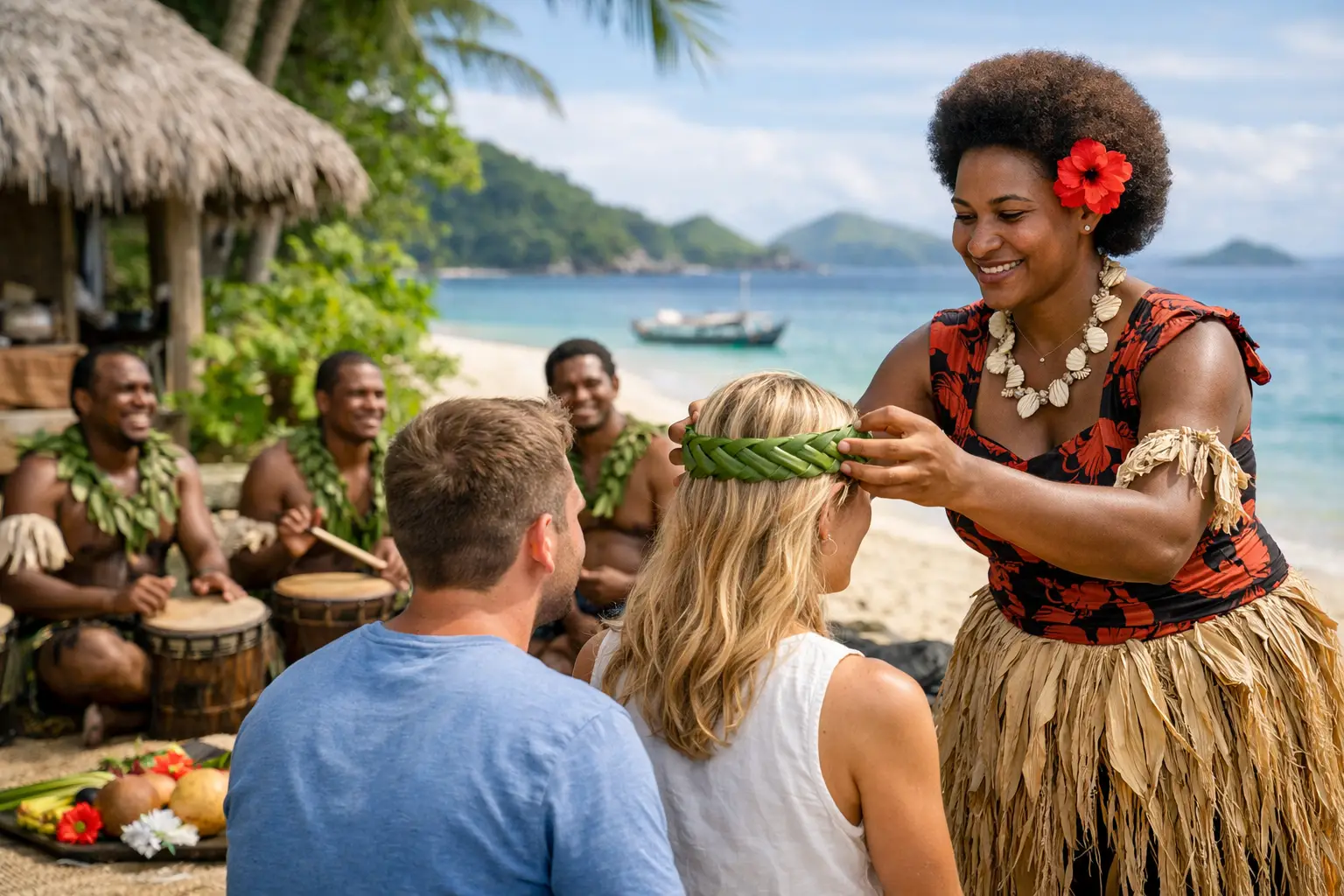
A Fijian welcome is often remembered long after a beach view or a shipboard dinner: the sound of voices rising during a meke, the quiet formality of a village greeting, or the shared ritual of a kava bowl. To plan Fiji cultural encounters well, especially during a cruise call, means allowing enough time for those moments to be more than a photo stop.
Fiji’s culture is living, local, and diverse. A meaningful experience should feel hosted rather than observed. That calls for thoughtful timing, respectful conduct, and a local team that understands both village protocols and the practical realities of getting guests back to the pier on schedule.
Start With the Port, Not the Wish List
Cultural experiences in Fiji are closely tied to place. The opportunities available from Lautoka, Suva, and smaller ports can differ considerably, as can drive times, road conditions, and the rhythm of local communities. Before selecting an experience, confirm your vessel’s arrival and all-aboard times, the port location, your party’s mobility needs, and how much travel time you are comfortable spending ashore.
For a short port call, a well-run cultural program close to the harbor may be the best choice. It can include a traditional welcome, local storytelling, crafts, music, dance, and refreshments without making the day feel rushed. With a longer call, guests may be able to combine a village visit with an inland scenic drive, a market visit, or a stop at a historic or faith-based site.
The trade-off is simple: a fuller itinerary shows more of Fiji, while a slower itinerary leaves room for conversation and genuine participation. For many first-time visitors, one well-hosted cultural visit is more memorable than three hurried stops.
Choose Community-Led Experiences
Not every cultural activity offers the same level of connection. Performances and demonstrations created for visitors can be enjoyable, particularly when port time is limited, but the strongest programs are transparent about who is hosting, where visitor fees go, and how the community benefits.
Look for experiences led by Fijian guides and community hosts who can explain the meaning behind what you see. A meke is not simply entertainment. It can carry history, identity, ceremony, and stories passed through generations. Likewise, a kava gathering is not just a beverage tasting. It follows customs of welcome, respect, and shared occasion.
A knowledgeable guide helps guests participate with confidence rather than uncertainty. They can explain when to remove hats, how to dress appropriately, when photographs are welcome, and what is expected during a formal greeting. That context turns a pleasant excursion into an encounter with real depth.
Understand the Difference Between Fijian Cultures
It is also worth remembering that Fiji is not culturally uniform. Indigenous iTaukei traditions are central to many village visits, ceremonies, and performances, while Fiji’s Indo-Fijian communities have deeply shaped the country’s food, faith, commerce, and daily life. Depending on the itinerary, a cultural day may include a Hindu temple exterior, a local market, sugar-cane country, or stories that reflect Fiji’s many communities.
Avoid treating any one visit as a complete picture of the nation. Instead, approach each host community as an opportunity to learn about one place and its people. Curiosity, paired with humility, is always appreciated.
Plan Fiji Cultural Encounters Around Proper Protocol
Village visits are privileges, not attractions that can be approached casually. In many settings, visitors enter as guests of the community and should follow the guidance of their host throughout the visit.
Dress modestly, with shoulders and knees covered where requested. It is wise to carry a lightweight wrap or scarf, particularly if your day includes a village, church, temple, or ceremonial setting. Hats may need to be removed, and guests should wait to be invited before entering a home, hall, or gathering space.
Photography deserves particular care. Ask before taking close portraits, photographing children, entering sacred areas, or recording a ceremony. A guide may advise that some moments should simply be experienced. Respecting that boundary is part of being a good guest.
If a traditional sevusevu welcome is included, your host or guide will explain the presentation of yaqona, commonly known as kava. There is no need to memorize every step in advance. Follow the lead of the community, participate if you are comfortable, and let your guide know discreetly if dietary, medical, or personal considerations mean you prefer not to drink.
Build in the Logistics That Protect the Experience
The best cultural programs are carefully organized behind the scenes. Cruise guests need clear meeting points, suitable vehicles, trained guides, realistic journey times, and a dependable return plan. This is especially relevant in Fiji, where a beautiful inland drive can take longer than a map suggests and weather can affect conditions.
When booking independently, ask direct questions: Is transportation exclusive to your group or shared? What is the planned buffer before all-aboard time? Is the operator experienced with cruise schedules? Who can assist if a guest needs additional support? The answers matter as much as the activity itself.
For families and multigenerational groups, consider the physical demands of the day. A cultural center close to port may suit travelers who prefer limited walking. A village visit with uneven paths, stairs, or a longer coach journey may be rewarding for active guests but less comfortable for others. There is no single right choice, only the right fit for your party.
Rosie Fiji Cruises can coordinate shore programs with transport, local guides, and cruise-specific timing in mind, making it easier for visitors and travel partners to plan a day that feels welcoming as well as well managed.
A Practical Pre-Departure Check
Before leaving the ship, make sure you have four essentials: clothing suitable for the setting, sun protection and water, a small amount of local currency if personal purchases are available, and your ship details with the correct return time. Keep valuables to a minimum and listen for any guidance about bags, footwear, or photography.
If you are traveling with children, prepare them in a positive, straightforward way. Explain that they may be welcomed warmly, but they should stay close to the group, ask before touching crafts or instruments, and give hosts their attention during a ceremony. These simple expectations make the visit easier for everyone.
Leave Space for Conversation and Local Craft
A cultural encounter becomes more personal when the itinerary includes unhurried time with the people who make it possible. Ask a guide about the meaning of a song, a pattern in a tapa cloth, the preparation of a local dish, or the role of a community hall. Specific questions generally invite better conversation than broad requests to explain “Fijian culture.”
If crafts are offered for sale, buy with intention. Handwoven goods, carved pieces, tapa, and locally made jewelry can be meaningful reminders of a visit, but quality and origin vary. Ask who made an item and how it is used. A purchase made directly from an artisan or community supports the people who have welcomed you.
Food can also provide a useful cultural connection. Fresh tropical fruit, cassava, taro, lovo-cooked dishes, and Indian-Fijian flavors all tell part of Fiji’s story. Let your operator know of allergies well ahead of time, particularly if a village meal or cooking element is planned. Advance notice gives hosts the best chance to accommodate you without disrupting the occasion.
Make Respect the Measure of a Good Day
A polished itinerary matters, but the feeling you leave with matters more. The most worthwhile Fiji cultural encounters do not promise access to every tradition in a few hours. They offer a respectful introduction, guided by people who know the place, while protecting community customs and your limited time ashore.
Choose an experience with room to listen, accept your host’s guidance, and carry that welcome with you when you return to the ship. Fiji’s warmth is often expressed in the care taken for a guest, and returning that care through attention and respect is the best way to honor the invitation.