
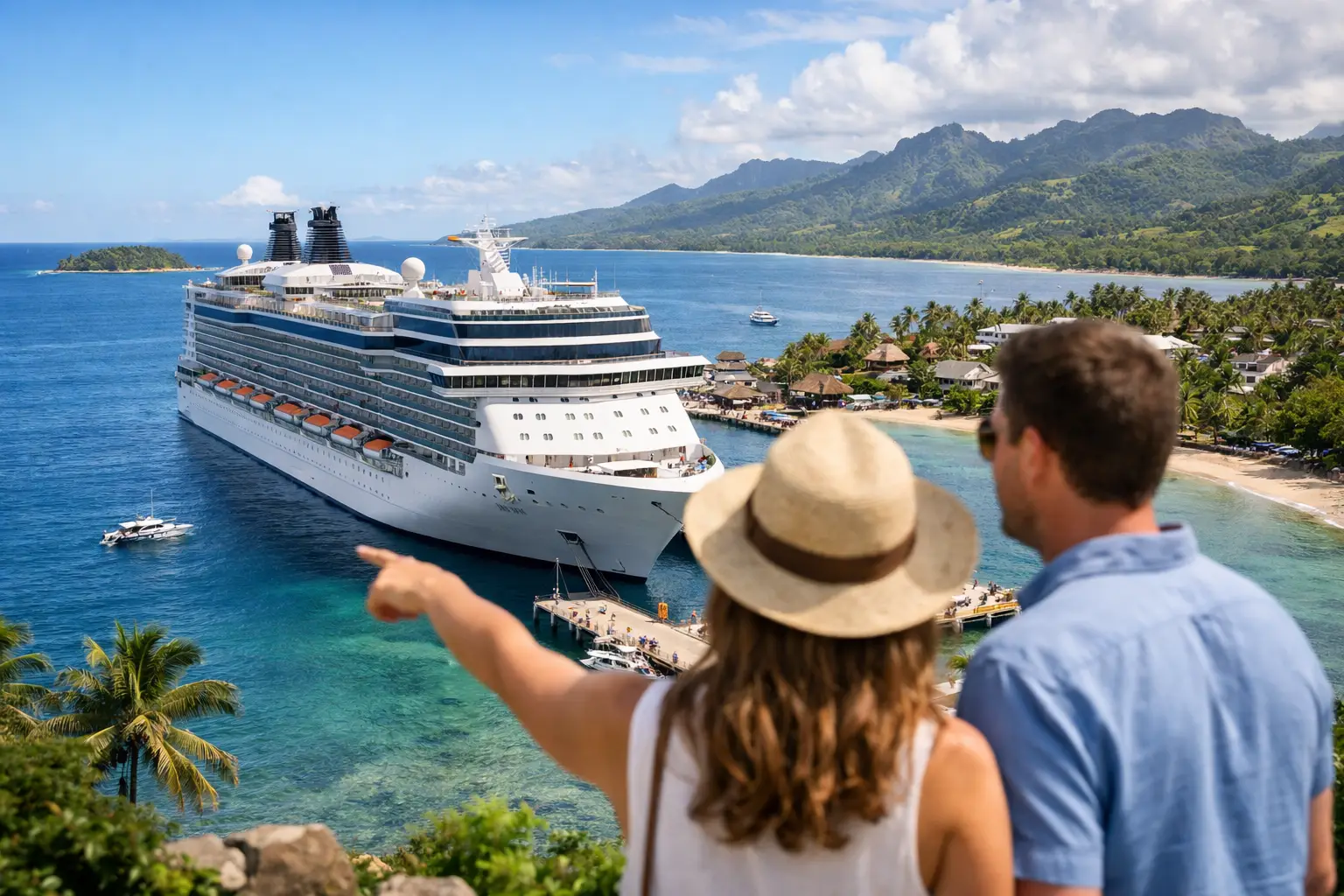
A Fiji port call can feel wonderfully open-ended: tropical water beyond the pier, welcoming music, and a full island waiting just beyond the gate. Yet port time is finite. To plan a Fiji port day well, start with the reality of your ship’s schedule, then choose an experience that gives you a genuine sense of place without turning the day into a race against the all-aboard time.
Fiji is not one single experience. A day in port may lead toward village life and cultural traditions, a rainforest road, a coral coast, a quiet river, or an island reached by boat. The best choice depends on where your ship is berthed, how many hours you have ashore, who is traveling with you, and how much time you want to spend in transit. Thoughtful planning leaves room for the unplanned moments that often become the most memorable: a warm welcome, a story from a local guide, or a view that makes everyone in the family pause.
Start With Your Actual Time Ashore
Your published arrival and departure times are only the beginning. Allow for disembarkation, security procedures, the walk or shuttle to the meeting point, and the time needed to return before the ship’s required boarding deadline. That deadline is often earlier than sailing time.
A practical rule is to select a shore experience with a clear return plan and a comfortable buffer. On a shorter call, a nearby cultural or scenic program can offer more value than trying to reach a far-off highlight. On a longer call, there may be time to combine a guided inland experience with a relaxed coastal stop, or to take a boat trip where conditions and vessel timings allow.
The port itself matters. Suva offers the energy of Fiji’s capital, with markets, historic sites, lush surrounding landscapes, and access to cultural and inland touring. Lautoka provides a gateway to the west, including sugar-cane country, gardens, villages, and coastal experiences. Denarau or nearby tender locations can place island cruising and resort-area activities within reach. Your day should be built around the port, not around a generic idea of Fiji.
Keep Tendering and Weather in Mind
If your itinerary includes tendering, build in additional flexibility. Sea conditions can affect the pace of getting ashore, while an afternoon shower can change the feel of an open-air activity. Fiji’s tropical weather is part of the destination, and light rain rarely means a day is lost. It does mean a well-run itinerary should have covered transport, sensible timing, and alternatives when conditions call for a change.
For boat-based activities, ask how weather decisions are made and whether the operator tracks the ship’s schedule. A beautiful outer-island experience is worth considering when the timing is generous and the return arrangements are professionally managed. It may be less suitable for a short port call or for guests who are uncomfortable on the water.
Choose the Fiji Experience You Want to Remember
A port day does not need to check every box. It should match the kind of memory you want to take home.
For many first-time visitors, a guided cultural experience provides a meaningful introduction. Fiji’s warmth is not a staged backdrop. It is found in the welcome, the sharing of food and stories, traditional music and dance, and the care shown to guests. A respectful village or cultural program can give context to what you see across the islands, particularly when led by guides who can explain local customs rather than simply point them out.
Travelers drawn to scenery may prefer an inland route. Fiji’s landscapes change quickly once you leave the waterfront: green valleys, tropical gardens, rivers, forested hills, and broad views over the coast. A 4WD safari can be an engaging option for active guests who want to see the island beyond resort areas, though it may not suit travelers with limited mobility or those seeking a slower, more leisurely day.
Families and multigenerational groups often benefit from choosing one central activity rather than moving constantly between stops. A calm beach setting, a gentle river excursion, or a cultural program with space to relax can keep different ages comfortable. Couples may prefer a private vehicle and guide, allowing the day to be paced around their interests, whether that means photography, local food, gardens, or time by the sea.
If your priority is the water, consider the practical details alongside the postcard appeal. Ask about transfer times, boat duration, shade, restroom facilities, swimming conditions, and whether equipment is provided. Snorkeling can be exceptional, but sea conditions, confidence in the water, and the age of younger travelers should shape the decision.
Plan a Fiji Port Day With the Right Level of Support
Independent exploration can work well for confident travelers on a flexible schedule, especially if the port is close to the places they want to visit. The trade-off is that transportation availability, local timing, and return logistics become your responsibility. In a destination where a single road delay can matter to a cruise passenger, organized arrangements offer valuable reassurance.
A shore program with confirmed transport, an experienced local guide, and a defined return schedule removes much of that uncertainty. It also makes it easier to understand the significance of what you are seeing. A good guide does more than manage the route. They help turn a drive through the countryside into an introduction to Fiji’s communities, history, faith, agriculture, and everyday island life.
For guests who value privacy, have specific accessibility needs, or are traveling as a family group, a private vehicle can be the right fit. It allows more control over walking distances, comfort stops, meal preferences, and pace. It is usually a higher-cost option, but the added flexibility can be worthwhile on a once-in-a-lifetime cruise itinerary.
Rosie Fiji Cruises coordinates shore-side experiences with the local transport network, trained guides, and cruise-focused operational support needed to make limited time ashore feel well cared for. That local coordination is especially useful when ships carry large passenger numbers and every departure, meeting point, and return window needs to work precisely.
Ask the Questions That Protect Your Port Day
Before confirming an excursion, make sure you understand the meeting location, total duration, inclusions, walking level, and return timing. If a meal is included, check whether dietary requirements can be accommodated. If you use a wheelchair, have reduced mobility, travel with young children, or have concerns about heat, share that information before the day begins.
It is also wise to ask whether the activity is designed specifically for cruise guests. The distinction matters. A tour that works beautifully for a hotel guest with an open afternoon may not provide enough margin for a passenger who must be back at the pier at a fixed time.
Make Space for Fiji, Not Just the Itinerary
The most satisfying shore days are not always the busiest. Leave a little room to browse a local market, enjoy a cool drink, take photographs, or simply watch the coastline from the vehicle window. Fiji is best experienced at a pace that allows you to notice its generosity and texture, not just its attractions.
Dress for heat and humidity in light clothing, bring sun protection, carry water, and keep a small rain layer close by. Modest attire is appropriate for village visits and religious sites. Your guide can advise on local etiquette, including when shoes should be removed and when it is appropriate to take photographs.
Currency, shopping, and free time can be enjoyable additions, but avoid placing them at the center of the day. A reliable experience, a knowledgeable guide, and a return to the ship with time to spare are worth more than one extra stop.
When you plan your Fiji port day around your ship’s schedule and your own travel style, the island has room to welcome you properly. Choose the experience that feels right for your group, let local expertise handle the moving parts, and save a few minutes to stand still and take Fiji in.