
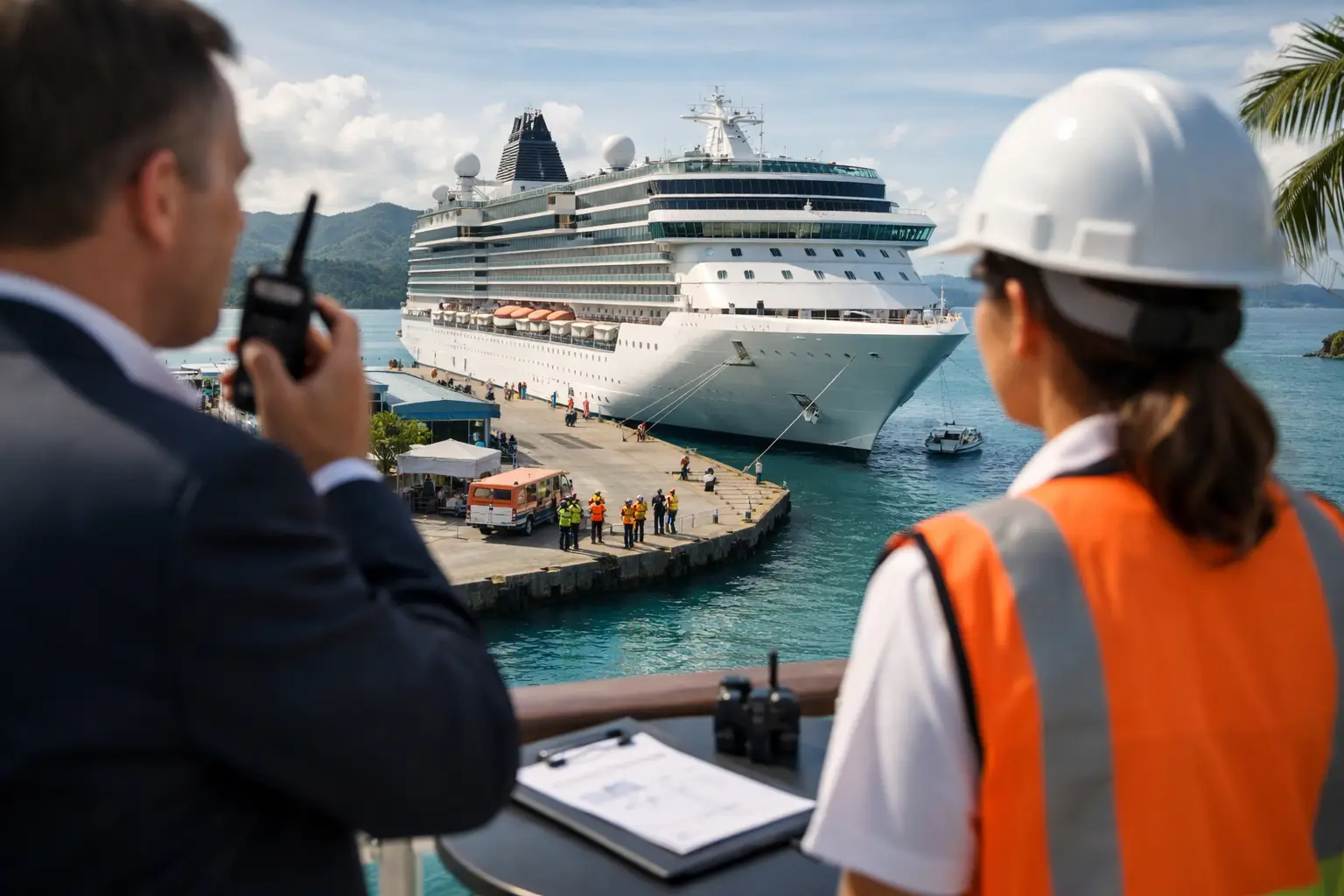
A cruise disruption response is tested long before a ship changes course, shortens a port call, or arrives later than planned. In Fiji, where a day ashore may include island transfers, cultural performances, inland adventures, and carefully timed returns to the pier, the quality of that response shapes the guest experience as much as the excursion itself.
For cruise lines and shore-excursion partners, disruption management is not simply about replacing a canceled tour. It is about making sound decisions quickly, communicating clearly, keeping guests safe, and preserving the welcome that makes Fiji memorable. For passengers, it means knowing that a revised itinerary can still lead to a well-organized and meaningful day.
Why Fiji Port Calls Need a Coordinated Response
Cruise schedules are affected by weather systems, sea conditions, berth availability, mechanical matters, medical situations, and changes made elsewhere on an itinerary. Some disruptions are known days ahead. Others emerge while a vessel is already at sea. A ship may arrive several hours late, need to reduce time in port, move to a different berth, or bypass a call altogether.
Each scenario creates a chain of operational decisions on shore. Transport providers need revised dispatch times. Guides need accurate guest counts and meeting instructions. Activity hosts need to know whether an experience can be shortened without losing its value. Catering, entertainment, marina teams, and venue partners may also need to adjust their schedules.
The right response depends on the nature of the change. A 60-minute delay is very different from a five-hour reduction in available shore time. A weather-related change may also affect marine activities, while a berth change may alter walking routes, vehicle staging, security access, and guest meeting points. Treating every disruption as the same creates unnecessary confusion and can compromise the experience.
The First Priority: Accurate Information
The most useful update is not always the earliest one. It is the one that has been confirmed and can be acted upon. Shore-side teams need a direct line to the ship and cruise line representatives so revised arrival estimates, clearance details, passenger numbers, mobility considerations, and departure requirements are understood by everyone involved.
Once reliable information is available, guests should receive simple, practical guidance. Where should they meet? Has the tour departure time changed? Is the original experience still operating? What should they bring if weather conditions have shifted? Clear answers reduce crowding at the pier and give travelers confidence that someone is managing the details.
For travel advisors and cruise partners, this communication should also make the operational impact visible without creating alarm. A late call may mean a modified itinerary, not a diminished day. When the local team can explain what has changed and why, the cruise line can communicate with its guests from a position of calm and control.
Building a Cruise Disruption Response Around Guests
A guest-centered response begins with realistic options. If time ashore has been shortened, the goal is not to force a full-day program into a smaller window. That approach can leave travelers rushing through every stop and worrying about getting back to the ship. A better option is to redesign the experience around what remains possible.
For example, a longer inland journey may be replaced by a closer cultural experience, a guided city and market visit, a local food stop, or a scenic coastal program with dependable travel times. Where conditions allow, a marine excursion may be adjusted to a nearer island or a shorter cruise. The best alternative still feels distinctly Fijian, while respecting the ship’s all-aboard time.
This is where local destination knowledge matters. A team that understands road conditions, traffic patterns, tidal considerations, venue capacity, and the pace required for cruise guests can make revisions that work in practice, not just on paper. It can also identify which elements of a program should be protected. A village welcome, a traditional performance, a waterfall setting, or time with a knowledgeable local guide may be the part guests remember most.
Safety and Ship Return Are Non-Negotiable
No shore experience is worth putting guests under pressure to return to the vessel. Every revised program must be planned backward from the ship’s departure time, allowing for transport, traffic, security procedures, pier access, and a sensible buffer for the unexpected.
This is particularly important for experiences involving boats, remote locations, or longer drives. Conditions can change quickly, and an itinerary that was comfortable in the morning may require a different route or an earlier return later in the day. Experienced ground handlers make these calls with the ship schedule at the center of every decision.
Guest care also includes accessibility and comfort. Travelers may have limited mobility, young children, dietary requirements, or concerns about heat and rain. During a disruption, these details can be overlooked if the focus is only on moving people quickly. A strong local operator keeps them in view, from vehicle suitability and hydration to shaded waiting areas and clear assistance at embarkation points.
What Effective Shore Operations Look Like
Behind a calm guest experience is disciplined coordination. Transport fleets may need to be held, repositioned, or released in stages. Guides may be reassigned based on language needs, revised group sizes, and the new shape of the day. Hosts at attractions and activity sites need realistic arrival windows, not vague estimates that leave staff and facilities waiting without direction.
For high-volume vessel operations, contingency planning should include alternative tour plans that have already been assessed for timing, capacity, safety, and guest appeal. It should also account for partial cancellations. A ship may still call, but sea conditions may prevent a specific water-based activity. In that case, teams need a credible replacement ready to activate, not an improvised answer at the pier.
Rosie Fiji Cruises brings this destination-management approach to cruise operations by coordinating transport, guides, touring, cultural entertainment, and on-the-ground support through an established Fiji network. The advantage is not simply having more options. It is having the local operational relationships to confirm what can genuinely be delivered when plans change.
Flexibility Has Limits, and That Is Good Planning
There is a temptation to promise every guest that their original plans can be saved. In reality, responsible disruption management means knowing when an activity should be shortened, changed, or canceled. Weather warnings, unsafe sea conditions, limited daylight, and insufficient transfer time should lead to clear decisions.
Guests generally respond well to a change when it is explained with care and followed by a worthwhile alternative. They are less forgiving when they are left waiting without information or taken on an itinerary that feels hurried and uncertain. Honest guidance protects both the traveler and the destination experience.
For cruise lines, this disciplined approach also protects service standards. A shore partner should be able to explain the trade-offs: what can operate safely, what must be modified, what capacity is available, and what the guest will receive instead. That transparency supports better decisions at sea and on shore.
Preparing Before the Disruption Happens
The strongest response begins in the planning stage. Cruise operators and shore partners benefit from agreeing on communication channels, escalation contacts, revised tour thresholds, and cancellation procedures before the season begins. It is also helpful to identify experiences that work well for shorter calls, wet-weather days, and guests who prefer less walking or easier access.
Operational teams should review each port call with practical questions in mind. How much time is needed for clearance and guest disembarkation? Which experiences depend on marine conditions? What is the latest realistic departure time for a longer tour? Which transport and guide resources can be redeployed quickly? The answers vary by port, vessel, season, and program design.
For passengers, the most helpful preparation is equally simple: choose organized experiences that build in return-to-ship planning, listen for shipboard updates, carry essential items for changing weather, and remain flexible if conditions require a different plan. Fiji rewards that flexibility. A revised day may introduce a cultural encounter, scenic route, or local welcome that was not on the original itinerary.
When a port call changes, travelers should not have to choose between uncertainty and disappointment. With informed local decisions, dependable transport, and warm Fiji hospitality, a disrupted schedule can still become a day that feels thoughtfully cared for from pier to ship.